Some films feel like they were shot. Enys Men feels like it was excavated.
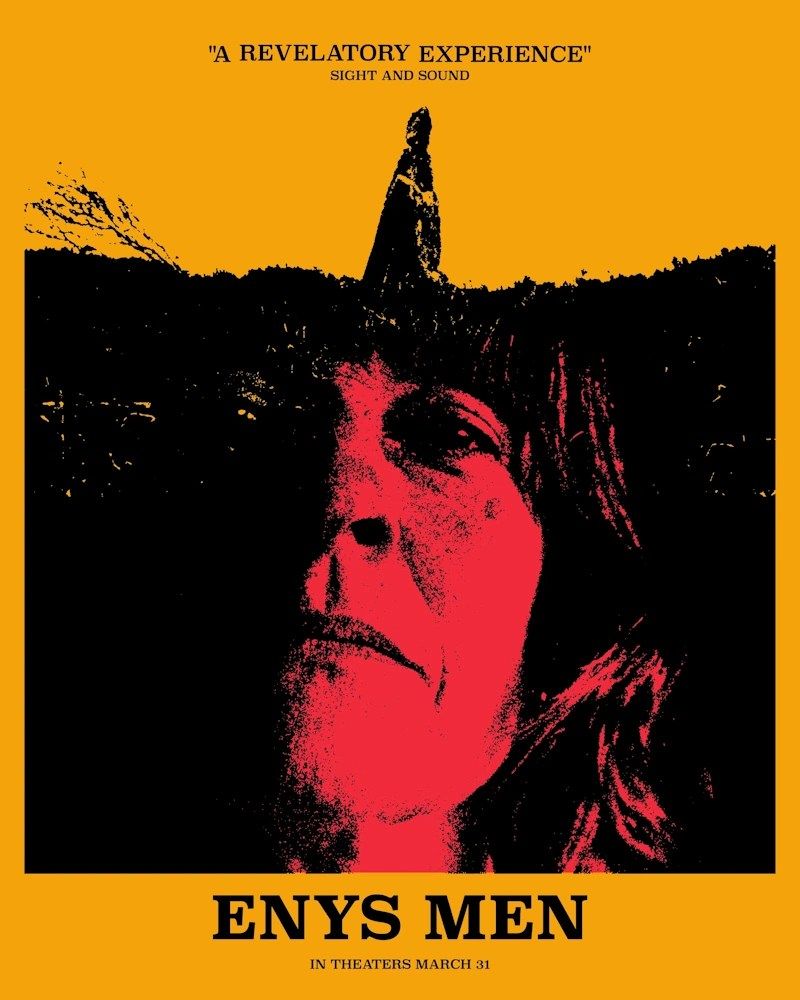
From the opening moments, Mark Jenkin’s film arrives with the texture of something half preserved by weather and half damaged by it. The image flickers and breathes. The grain feels alive. The island seems less like a setting than a substance that has seeped into the frame itself. What follows is one of the most uncompromising British horror films in recent memory, and one of the clearest expressions of hauntology and folk horror put on screen in years. Not because it talks about those ideas, and certainly not because it flatters the audience with tidy symbolism, but because it moves with the deep logic of both. Ritual, landscape, residue, recurrence, memory. Enys Men is built from those materials and nothing cheapens them.
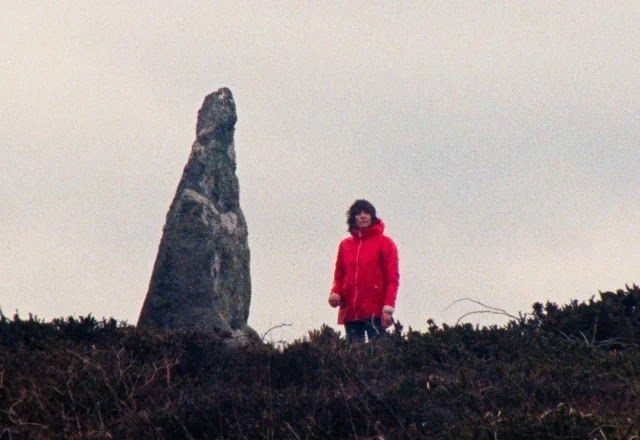
Set on a remote Cornish island in 1973, the film follows a volunteer who records daily observations on a patch of flowers near an abandoned mine. That premise sounds almost too slight to sustain a feature. Jenkin knows this and turns the thinness into pressure. The woman climbs, notes, returns, listens, repeats. The days do not pass so much as gather. Routine thickens into ceremony. The island begins to feel sealed off from ordinary time, as though every gesture performed there has happened before and will happen again. Watching it carries the same peculiar unease as standing in a neglected room of a coastal mining museum where the educational displays have browned behind glass, the diagrams still cheerful, the language still brisk, but something in the air suggests the information has outlived the people it was meant to reassure.
That atmosphere is the film’s great triumph. Jenkin understands that folk horror reaches its most potent form when place begins to exert authority over the people trapped within it. The island in Enys Men has that authority. It does not loom in a theatrical way. It presses. The mine shaft in particular feels less like a piece of old industry than an injury in the landscape, a dark opening that has never properly scabbed over. Everything around it seems to have adjusted to that wound. The flowers, the stone, the weather, the repeated acts of documentation all take on a devotional quality, as though the island has demanded observance for longer than anyone can remember. This is where the film becomes folk horror in its purest state. The land is old, the task is small, and yet the human being at the centre of it begins to seem terribly fragile before forces that never need to introduce themselves.
Hauntology runs through the film with the same certainty. Jenkin does not use the past as decoration. He makes it behave like a contaminant. Enys Men feels like one of those cultural objects that should have remained sealed away. It has the atmosphere of a film reel discovered in a rusting cabinet above a village cinema long since stripped out and turned into flats. It carries the same chill as a spool of local television footage from the seventies, the kind showing harbour repairs, cliff collapses, chapel fêtes and mine closures, all narrated in a clipped voice of civic calm that now sounds oddly funereal. The past here has not been revived with affection. It has lingered with a kind of mineral stubbornness. That is what makes the film so hauntological. Time has not moved on cleanly. It has left deposits.
Mary Woodvine gives a performance perfectly tuned to that world. She is isolated without grandstanding, vulnerable without pleading for sympathy, present without ever dominating the frame in the manner of a conventional horror lead. Her strength lies in the refusal to force meaning on anything. She watches, records, endures. Slowly that observational distance starts to erode. Her face carries the strain of someone trying to maintain a rational routine in a place where reason is becoming a thinner and thinner membrane. Woodvine’s restraint keeps the film alive. A louder performance would have broken the spell. She allows the island to stay larger than she is, which makes every shift in her expression feel consequential.
Jenkin’s decision to shoot on 16mm is central to the effect. The film stock gives Enys Men a tactile unease that digital imitation rarely captures. Colours bloom and bruise. Whites flare with an almost surgical harshness. Reds feel too dense, too bodily. At times the image looks faintly corroded, as though salt air has worked its way into the emulsion. The result is not simple period authenticity. It creates the impression that the film itself has been weathered by the same forces haunting the island. You are not looking through a clean window onto the past. You are looking at a damaged surface that has held the past inside it. For a film so concerned with traces, repetition and the persistence of buried things, that material quality is invaluable.
The sound design is just as exacting. Wind scrapes against the world like a blade drawn over stone. Radio transmissions arrive with the eerie intimacy of voices surviving in bad conditions. Footsteps and knocks carry an unnatural weight. Silence is never neutral. Every sound feels trapped in the same system of recurrence as the images. There is a special kind of British dread in hearing a practical voice emerge through static, steady and untroubled, while everything around it seems slightly wrong. Enys Men knows that sensation intimately. It feels close to listening to an old weather bulletin in a harbour office after everyone has gone home, fluorescent light humming overhead, damp rope stacked in the corner, tide charts curling at the edges. Calm information can become terrifying when the world receiving it no longer feels reliable.
One of the boldest things about the film is its refusal to give itself away. Jenkin never panics and turns the experience into a puzzle to be solved. Faces appear with the solemn force of things remembered rather than introduced. Time folds, loosens, doubles back. Bodies share the frame with the certainty of apparitions that belong there whether or not the viewer can place them. The island becomes a surface on which different moments have been impressed without ever being properly separated. That structure matters. Folk horror loses force when it explains too much. Hauntology dies the moment it becomes self conscious nostalgia. Enys Men avoids both traps by trusting mood, repetition and spatial memory.
There are viewers who will find the film trying. Fair enough. Jenkin asks for surrender rather than casual attention. The repetition can feel punishing. The opacity can feel severe. There are stretches where the film risks hardening into ritual so completely that some will mistake the discipline for emptiness. Even so, that severity is bound up with the film’s success. Nothing has been softened for convenience. Nothing reaches out to reassure. The island keeps its silence, and the film keeps faith with it.
What lingers after the credits is not plot but sensation. Lichen on stone. White petals against red marks. Static in a closed room. The feeling of walking through a landscape that has seen too much and retained all of it. Jenkin has made a horror film where haunting behaves like weather and belief behaves like geography. That is no small feat. Too much modern horror strains for prestige and ends up embalmed. Enys Men feels alive in a stranger way. It feels inhabited.
As a review, the verdict is simple. Enys Men is one of the finest British horror films of the past decade, and among the purest modern works of hauntology and folk horror you are likely to find. It does not seduce. It settles over you. It leaves behind a taste of sea salt, rust and old paper. By the end, the film feels less like something you have watched than something you have been exposed to, which is exactly why it lingers like a curse carried home in the pocket of your coat.
 Hauntology.co.uk
Leave a comment