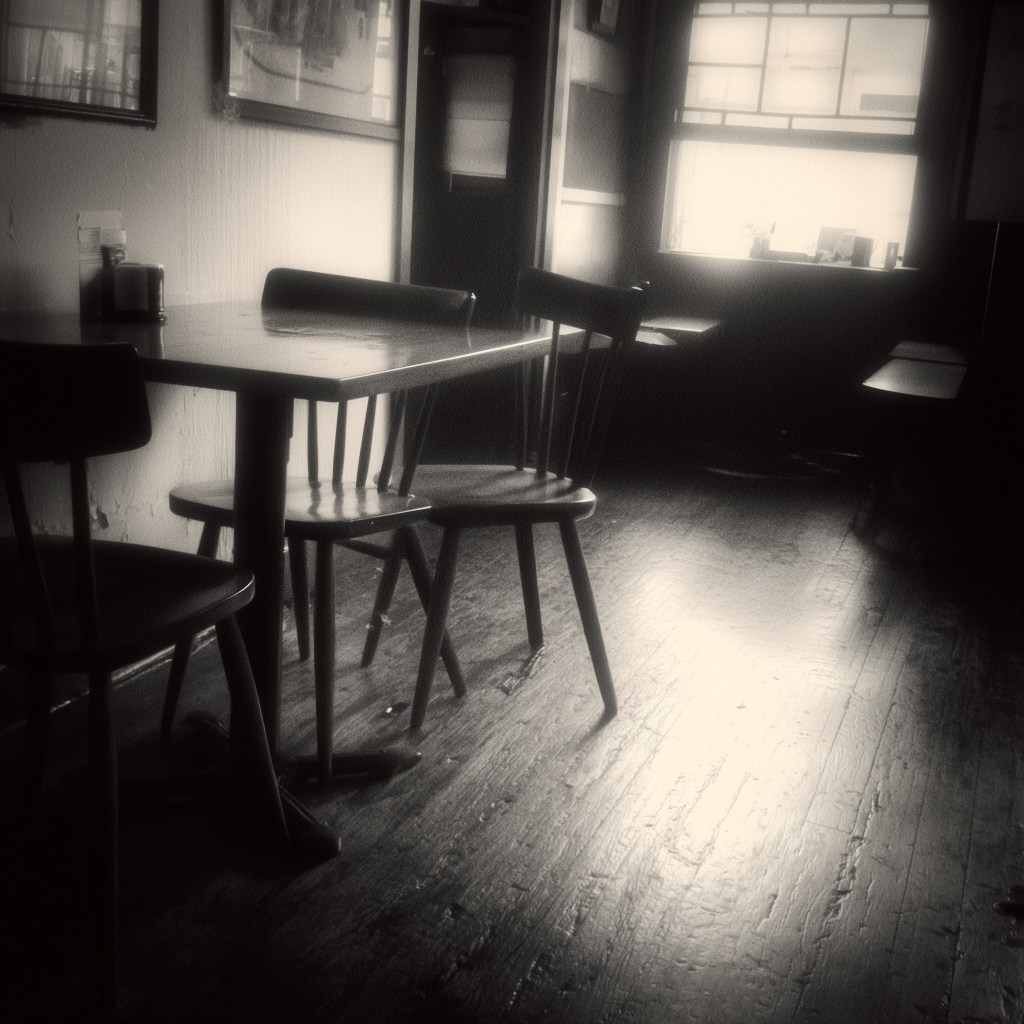
There are certain forms of fear that still possess the decency to introduce themselves.A smashed window does not deal in subtlety. A kicked in door does not pretend innocence. Fire, blood, broken lock, overturned chair, the old recognisable grammar of visible damage, all these things at least have the courtesy to declare themselves. They tell the room what has happened to it. They tell the body how to understand the scene. However dreadful such moments may be, they are not evasive. The world has torn its own face open. It has admitted that some boundary has been crossed.
Far worse, to my mind, are the occasions on which nothing visible has broken and something invisible has gone back on its word.The window remains whole. The curtains hang where they have always hung. The stairs still rise in the same narrow way. Water moves through the pipes. A car goes by outside. Somewhere down the street a bin lid shuts with that flat municipal clap that belongs to no season in particular and every one of them at once. The day appears to have kept its appointments. And yet the room, or the house, or the street, or the whole arrangement of the familiar world, has withdrawn from you by so small a degree that the mind cannot immediately prove the insult.
Nothing in the room is openly wrong. That is what makes it so difficult to forgive.
A chair may remain where it has always stood and still seem no longer fully claimed by the floor beneath it. The lamp may cast the same yellow on the same wall and yet produce a meaner kind of evening. The hallway may preserve its dimensions and somehow ask more of the body than it asked yesterday. A door left half open may look no more nor less open than usual and nevertheless give the impression of having been left so by a different house. The difference is too slight to isolate and too complete to dismiss. One cannot accuse the room of anything. One can only feel, with that old private certainty that belongs to nerves before language, that some prior agreement between oneself and the visible world has been quietly rescinded.
That is where a deeper kind of dread begins. Not in catastrophe, but in amendment. Not in intrusion, but in revision. Not when reality breaks apart before us, but when it continues, obedient and ordinary and outwardly intact, while ceasing to keep faith.A room after violence is terrible in a way the intellect can still arrange. One can say, here is the point of impact, here the sign of entry, here the object that has been moved, here the interruption in the known order. The self remains frightened, perhaps deeply so, but it is not humiliated by its fear. It has evidence. A room that has suffered no visible injury and still contrives to estrange itself from the body is another matter altogether. It leaves one in the undignified position of recoiling before one can say from what. The hand pauses at the threshold. The eye drifts over familiar surfaces not in recognition, but in search. Search for what does not yet present itself. The body has already stepped back by the time the mind begins putting on its shoes.
This is one of the less flattering truths about consciousness. We like to imagine that thought comes first and feeling follows behind like a clerk carrying files. In reality, the body has usually delivered its verdict long before the mind has built a sentence strong enough to carry it. There is an older intelligence in us, less articulate and more exacting, that does not care for argument. It notices what has shifted in scale, pressure, timing, relation. It notices before the eye has settled and before the tongue has found anything respectable to say. When a place turns against us by small means, it is usually this older intelligence that knows first. The modern self, with its explanations and preferences and polished little claims of detachment, arrives later, blinking in the half light, trying to defend itself against something that has already passed judgement elsewhere.
Which is why slight displacement has such peculiar force. It does not need spectacle. It does not require a face at the window or footsteps on the landing. It attacks below discourse, where the body keeps its mute contracts with the world.
We flatter ourselves that reality is held together by its larger features. Walls, roads, names, maps, addresses, official functions. We tell ourselves that so long as these remain in place, the world is intact. Yet much of ordinary life is not anchored by such broad structures at all. It depends upon a thousand minor loyalties so continuous and so unglamorous that one scarcely notices them until they fail to arrive. The angle at which the front room begins to darken at half past four in winter. The exact depth of silence on the landing after everyone has gone to bed. The known smell of a stairwell after rain. The way the back door resists for half a second in damp weather and then gives. The colour of a lamp that makes evening feel survivable. The particular complaint of a floorboard that sounds only under real weight. The way a curtain lifts in a draught, not enough to reveal the window, only enough to remind the room that outside still exists.
None of these things are decorative. They are among the hidden bearings by which a life keeps itself steady.
What we call comfort is often only the successful return of such small fidelities. The body does not need a place to be perfect. It needs it to be legible. It needs a certain obedience from the world, not a grand obedience, merely the familiar submission of sequence and relation. The lamp comes on as expected. The corridor accepts the body at the known pace. The view from the upstairs window carries the right emotional weight for the hour. The street outside sounds inhabited at the customary times. One does not think to thank such arrangements. One lives on the strength of them without ever admitting the dependence.
Then some tiny change occurs, often in the name of improvement, and the whole arrangement begins to sour.A brighter bulb. A new paint colour. A rug shifted by inches. A table turned by a few degrees. Cleaner sight lines. Better storage. More light. The removal of a chair nobody consciously liked. One ought to welcome the change. One does, perhaps, in theory. Yet theory carries very little authority in the dark. The body, which had quietly lodged some of its steadiness in the previous arrangement, finds itself unrecognised by the new one. Nothing dramatic has been taken away. The old geometry has simply stopped returning the same reassurance.
Geometry has more to answer for than people imagine.It is not only objects that make a place feel habitable, but the intervals between them. The amount of wall above a chair. The distance between bed and door. The degree of enclosure offered by a corner. The width of a hallway relative to the pace at which one crosses it. The quantity of shadow permitted to gather at the edge of a room without becoming accusation. The relation between lamp and ceiling. The amount of time it takes the eye to settle on entering. These are not the things people discuss over dinner, but the body learns them with a devotion almost embarrassing in its patience. It knows how far it must reach. It knows where darkness begins. It knows which turn in the room allows the shoulder to miss the table without thought. It knows, above all, when a place has stopped cooperating.
The uncanniness of slight displacement begins here, with altered proportion rather than altered object. A chair moved across a room announces itself plainly. One can say, that chair has moved. But let the chair remain where it was while the light changes, or the table turns, or the rug slips a little from its old relation to the skirting board, and the damage becomes harder to name. The mind keeps returning to the scene because nothing is guilty enough to accuse. The body keeps refusing the room because the old pact between movement and space has been quietly amended. This is why improvement is so often eerier than decay.
Decay tells the truth. It is melancholy, but it does not lie. Damp rises. Paper yellows. Wood swells. Brass dulls. Paint gives up at the corners. Such things belong to the visible contract between time and matter. A room in decline has a sadness one can enter without shame. Renovation is more slippery. It seeks to preserve use while altering temperament. It refreshes what it does not understand. It brightens what once depended upon a kinder fall of shadow. It flattens history into surface confidence. So many British interiors now seem trapped in this exact condition, neither old enough to carry their age honestly nor new enough to justify their revisions, merely cosmetically adjusted into a form of polite estrangement.
Your favourite pub repainted in fashionable tones may cease to know what to do with dusk. A hotel corridor fitted with cleaner carpet and brighter bulbs may become less a place of passage than a place of inspection. A living room with tidier furniture and harsher light can begin to feel as though it is waiting for a viewing rather than an evening. Even the humble kitchen is not immune. Better storage, improved layout, more clarity, all these things can leave the room thinner, less forgiving, less willing to absorb the muddle and rhythm by which real life actually passes through it. One does not feel that the room has been repaired. One feels that it has been edited.
There is a particular chill to edited spaces. Not the solemn chill of ruins, nor the theatrical chill of explicitly haunted places, but the needling chill of somewhere that has been cosmetically persuaded to behave like itself and no longer quite remembers how. Such rooms are often brighter than before, cleaner, better organised, more defensible in photographs, and somehow less believable. One senses not renewal but internal dispute. One era still speaks faintly through the walls while another has been ordered to stand in front of it and smile.
This sort of unease is rarely granted the dignity it deserves because it sounds petty when said aloud. It is difficult to complain, in morally serious tones, that a room has become spiritually illegible after somebody improved the lighting. Yet the body is no respecter of what sounds dignified in speech. It knows when it is no longer being received in the old way, and it resents the injury whether or not the intellect has grounds for appeal.The same principle extends beyond the room, into streets and towns and all the larger arrangements by which one lives without ever fully consenting.
A ruined abbey may be atmospheric, certainly, but nobody is betrayed by an abbey. It is allowed its solemnity. It may brood if it likes. An ordinary British street is another matter. A row of terraces. A bend after the chemist. The slight rise before the estate. The underpass that always smells faintly of rain and concrete. The parade of little shops whose fronts have changed one by one without ever quite dislodging the older ghost of what they were. Such places are not obliged to enchant. They are obliged to continue. They hold shopping bags, school runs, keys, post, takeaways, bin days, low level disappointments, little rituals of return. Which is precisely why they become so unsettling when they cease to feel neutral.
A street does not need to be empty to become uncanny. It only needs to miss its cue.
Timing may be one of the least discussed sources of ordinary dread. We speak readily enough about look and texture, yet a place is also made of when things happen in it. When curtains usually draw. When bins are put out. When children are last heard in the road. When dogs begin barking. When kitchen lights appear behind frosted glass. When the bus should arrive. When the church bell reaches you. When a takeaway sign first stains the pavement with its colour. These are not details laid over life. They are among the hidden rhythms by which the body knows what hour it is more intimately than any clock.Alter the timing and the whole place begins to emit a low administrative wrongness.
A road where curtains remain open too late can feel exposed in a way no police report would recognise. So can one where they close too early. The sound of a lawnmower beneath a sky that still belongs, in your bones, to February. Christmas lights still hanging when spring has already begun to thin the cold. A bin lorry on the wrong day. Washing out when the year feels unripe for it. Children’s voices absent at an hour that ought to carry them. None of these things are frightening in themselves. That is precisely why they work. Nothing enters with a knife between its teeth. The place has simply begun telling time in the wrong accent.
Anyone who has walked through a familiar area at an unfamiliar hour knows how severe this can be. The same row of houses at half past two in the morning is not merely a dimmer version of itself at tea time. It has become another moral arrangement. The same precinct on a Sunday evening and a Tuesday noon are not the same precinct. The paving remains. The benches remain. The signs keep their official face. But the purpose that usually moves through them has thinned or gone elsewhere, leaving the architecture prematurely visible, like a stage seen before the actors arrive. Such places are not empty in the poetic sense. They are misfiring. Their intended life has failed to complete the image.
This is one reason why early mornings in public places can feel indecent. A shopping centre before opening. A station too early for the first real tide of people. A supermarket with all its lights fully awake while the day itself still seems unconvinced. Every sign continues speaking in the imperative voice of ordinary commerce. Open. Welcome. Today only. New in. Yet nothing human has yet arrived to ratify those commands. One sees the machinery of use without the warmth of use itself. Escalators, polished railings, glossy signs, bins already waiting with their mouths open, all of it present, correct, and faintly false. The place has not died. It has merely shown you its face before it is ready.
A town can be made uncanny in another way too, through over familiarity rather than scale. This is one of the most distinctly British forms of unease. Not the dread of being lost in vastness, but the dread of recognising too much and still not feeling held. There are roads one knows through the body rather than through thought. The exact point where the bypass first reveals the church spire. The mini roundabout everyone ignores. The shut up shop with older lettering still faintly visible beneath the new sign. The lane that narrows after the red brick wall. The chapel turned into a house whose windows are still wrong for being domestic. The edge of town where the retail units begin, each one making its own tired claim to the future. One does not consciously map such places every time. One absorbs them through repetition, through use, through that long low apprenticeship by which the body learns where the world usually places its weight. Then the council shifts a barrier, reroutes a pavement, widens a corner, adds a lamp, removes a hedge, exposes what used to remain in peripheral shadow, and the mind says, quite sensibly, that nothing much has happened. The body is less charitable. It knows that sequence has been wounded. The place no longer reveals itself in the old order. A town can remain navigable while losing the emotional syntax by which it was once read.
That is enough to unsettle for months.Sound makes this worse because sound is one of the quickest ways for a familiar place to estrange itself without changing shape. A fridge humming at a higher pitch than before. The boiler clicking too late. Traffic from a distant road carrying more clearly than it used to, as though the air itself had been stretched and thinned. Rain against the window sounding lighter than the season should allow. A neighbour no longer heard through the wall. A staircase no longer speaking at the third step. Silence, especially social silence, can be one of the great engines of displacement. Not noble silence, not countryside peace, but the silence left when a known irritation vanishes and takes a layer of reality with it.
This is one of the more awkward truths about comfort. A great deal of it consists not in pleasure, but in calibration. We do not need the world to be ideal. We need it to recur. The door may stick. The pipes may knock. The television next door may leak through the wall every evening at exactly the wrong volume. One complains, of course. Yet when such sounds stop without explanation, annoyance gives way to suspicion. The building begins to feel less companionable, more exposed. Remove a known nuisance and you may also remove a proof of life.
Small domestic repairs therefore carry a peculiar aftertaste. A floorboard no longer speaks. A cupboard door now closes too cleanly. A stair at last keeps its silence. One ought to be pleased. And one is, in a practical sense. Yet some minute intimacy has been erased. The place becomes more efficient and less itself. A friction the body had long ago folded into its local knowledge has been smoothed away, and with it goes a tiny private assurance. The house has accepted treatment from another hand and now requires reintroduction.
One sees something similar in childhood places revisited later, though here the injury is more difficult to assign to the place alone. A playground still standing. The path behind the shops. The tunnel by the school. The corner shop now something else but still occupying the same depth of pavement. These places are often eerier when they survive than when they vanish. Ruin at least permits mourning. Continuity produces friction. The world has gone on operating the old machinery for other users. The same gates open and close. The same path receives new feet. The same wall carries weather into another decade. One is faced not with a tomb, but with persistence. The place has kept its form and withdrawn one’s role inside it.
That may be one of the crueler varieties of slight displacement, when the room or street has remained almost loyal and it is one’s own fit within it that has altered. The betrayal does not seem to come from the world so much as from time having amended the terms of recognition. You do not stand in the old place as you once did. The place does not rise to meet the old self because the old self is no longer available to complete the arrangement. The geometry may be unchanged. The body is not. The result is a strange coldness no renovation could ever achieve. You are not in the wrong place. You are in the right place under an expired covenant.
This is why grief so often announces itself through absurdly minor details. Not the grand emblems of loss, but the cup still in the cupboard, the coat on the hook, the chair held to one side of the room by a long dead habit of use. Outsiders think the bereaved are attached to objects. Often they are attached to arrangements. To the pressure one life placed upon another through years of repeated proximity. Once the person has gone, the room still contains its evidence and can no longer perform its old composition. Too much remains. Too little works. The result is not emptiness, but nearness without viability.
That is one of the essential climates of haunting, and it requires no apparition.In fact, the ordinary world produces this effect more efficiently than most ghost stories do. A home after separation. A street after a family has moved. A workplace after someone leaves and their habits continue as gaps in the pattern. The spoon not where it used to be. The right hand drawer opened by instinct and found wrong. The workstation cleared too thoroughly. The radio silent. The clock louder than before. Nothing supernatural has entered. The arrangement has simply ceased to house the old life and has not yet settled into the new one. One walks about inside an unfinished translation.
Workplaces, perhaps because they are built from routine, are especially vulnerable to these injuries. A kitchen with the cloths in the wrong place. A prep section handed over cleaner than usual and therefore less usable by touch. A spoon rest missing. A container moved only slightly. Such things are ridiculous to explain and impossible to ignore. Under pressure, the body depends upon certainty beneath thought. Disturb that certainty and fatigue arrives twice as fast. The mind is forced to supervise what habit once carried. Irritation begins gathering in the corners. The whole shift takes on the mood of a room that will not return eye contact.This principle scales upward into larger civic and technological life as well. It is not only old rooms and local roads that have become spiritually unreliable. Modern systems excel at producing slight displacement under the banner of convenience. Motion sensor lighting. Automatic taps. Self check in. Screens replacing counters. Recorded voices replacing people. Doors that decide for themselves when your body counts as a valid event. None of this is apocalyptic. The true disturbance lies elsewhere. Places become easier to move through while feeling less mutually inhabited. The old minor negotiations of shared life are stripped away. In their place comes a cleaner, thinner order in which one is efficiently processed and faintly derecognised.
Take motion sensor lights. A trivial example perhaps, yet a telling one. The old switch required a declaration. I am here. I want light. The new system waits in the dark and acknowledges your presence only when you cross an invisible threshold. This is useful, yes. It is also subtly disciplinary. The building watches for movement and decides when illumination is warranted. A corridor that used to receive a hand now receives a body as trigger. One can scarcely object without sounding deranged, and yet the moral atmosphere is plainly different. The place has ceased to trust presence and has begun verifying it.
There is a great deal of modern life like this. It does not terrify in the dramatic sense. It merely lowers the warmth of ordinary reality by small programmable increments.One need not romanticise everything that came before to notice what is lost. Human friction, yes, but also human cushioning. The receptionist who might recognise your face. The counter that might allow a pause, a shrug, a tiny moment of mutual weather. The awkwardness of a manual system that proves somebody else has passed through it. The world does not need to be charming. It does need, now and then, to feel as though it was shaped by fellow occupants rather than imposed by managerial abstraction. When that sense weakens, life acquires a polished illegibility. Spaces function. Souls recoil.
Light deserves separate attention because light can alter the moral nature of a room without changing a single object inside it. Certain rooms depend upon dimness not as disguise but as mercy. A sitting room that receives evening through one warm lamp and a little softened shadow is not simply darker than the same room under harsher bulbs. It is more forgiving. It allows surfaces to remain companionable. It permits the self to arrive by degrees. Sharpen the light and the room does not merely become clearer. It becomes less willing to shelter uncertainty.
Too much modern brightness carries a tone of inquiry. Rooms made for softness become witnesses under examination. Corners once permitted to fall away modestly are dragged back into statement. The result is often defended as cleaner, fresher, more contemporary, and perhaps it is. Yet the emotional contract has been revised. One no longer sinks into the room. One stands inside it. A place built to hold evening begins behaving like a room in which evening has no rights.
The opposite problem can occur too. Public places underlit by accident or economy become uncanny not because they are romantically dim, but because they have failed to provide the certainty they promised. A station under weak yellow bulbs. A car park with every third lamp out. A passageway in which light arrives late and leaves early. Here the unease belongs not to folklore, but to neglect. The institution still claims its authority, yet no longer supplies enough visibility to support it. The result is a particularly mean kind of dread, one born not from mystery but from partial maintenance. The world has not become magical. It has merely stopped caring quite enough.
Smell performs similar betrayals. A house or building that smells wrong can undo the eye in seconds. Not foul necessarily. Wrong. Cleaning fluid too sharp for the room it is meant to reassure. Damp where warmth should live. Sweetness in a corridor that ought to be neutral. Someone else’s cooking in a stairwell that had become, over years, part of your idea of home. The smell of old paper removed from a bookshop and replaced by something curated and airless. Smell does not merely trigger memory. It binds use to place. Change the smell and the place begins submitting evidence on behalf of another order entirely.
Even weather can produce slight displacement when it arrives in the wrong emotional register. Sea air too far inland. Heat on a road that should still belong to damp. Fresh cut grass under a sky that feels one month too early for it. Smoke on a clean afternoon. The world begins speaking one language through another. We are not made to live only by clocks and calendars. The body keeps older almanacs. It knows the smell a day ought to have. It knows when a season is wearing borrowed clothes.
Social life has its own quieter versions of this phenomenon, and they may be the most painful of all because they are hardest to defend. A friendship does not have to rupture to become haunted. It need only preserve its outer wording while altering the pressure behind it. The same greeting in a different register. The same shared joke arriving a little too carefully. A question asked with correct interest and no longer the old warmth. One can scarcely accuse another person of these changes without sounding paranoid. Yet the body notices at once. Tone is also geometry. Warmth is also proportion. A relationship can remain fully grammatical while ceasing to feel mutual.
Manners often deepen this injury rather than softening it. A row at least clarifies. Cordiality, when revised by one degree, can linger like smoke for months. The face remains familiar. The phrases behave. Nothing openly indecent is said. Only the invisible arrangement has changed. This is perhaps one of the reasons British social life lends itself so well to these forms of unease. We are trained to continue under altered conditions while pretending the indoor weather has not changed. Bit different now. Not the same. Funny atmosphere. Mild phrases for genuine estrangements. The understatement gives dignity, perhaps, but it also traps the feeling inside a room too small for it.
A nation can grow haunted in precisely this way. Not by spectacular collapse, but by long residence inside revised conditions that are never fully named. The same institutions. The same streets. The same routines. Only the underlying confidence has thinned, and everyone continues under the reduced pressure as though it were not teaching the soul a new shape.
No wonder ritual becomes precious. Ritual is one of the body’s oldest answers to slight displacement. The same mug. The same route. The same chair. The same order of tasks. The same little sequence in the morning by which the self reassures itself that recurrence still has some jurisdiction. There is nothing childish in this. It is a local treaty against erosion. When the broader world keeps amending its terms, one marks out smaller territories in which reality may still be coaxed into repetition.Which is why disruption to ritual often feels disproportionate. The spoon is not in the drawer. The bus stop has moved. The usual aisle is blocked. The little shop is shut. The kettle has been put away in the wrong cupboard by some well meaning hand. Each of these things is trivial in any grand moral reckoning. Yet their force lies not in their size, but in the fact that they wound a private system of continuity built precisely because larger systems have become less trustworthy. The body feels not mere inconvenience, but exposure. A local charm has failed.
Perhaps this is why adult life so often acquires a haunted quality without ever becoming dramatic enough to deserve the word. It is not only that time passes. Too vague. Too ceremonial. It is that one keeps stepping into revised versions of once reliable arrangements. The pub changes hands. The corner shop becomes something blander. Parents age and alter the tone of the house simply by moving through it more slowly. Friends leave towns. Streets are widened. Interiors are modernised. Workplaces adopt new software, new language, new hierarchies, new lighting. Bodies themselves become less obedient, less instantly recoverable, more sensitive to poor sleep, stale air, wrong temperatures, small strains. The self is expected to continue as though continuity were intact. In practice it lives amid escalating slight displacement and calls the result adulthood.
A great many people move through this with more grace than they are given credit for. They learn to underreact. They make tea. They say it feels a bit odd in here. They continue. Yet underreaction should not be mistaken for lack of injury. Sometimes it is simply the chosen style in which injury is carried.There is one quiet mercy hidden inside all this. The very fact that slight displacement can wound us so effectively reveals how intimate our bond with the ordinary world really is. We are not detached observers living above our surroundings like landlords of our own consciousness. We are distributed into the arrangement of things far more than pride would like to admit. Part of the self lives in the way the lamp comes on, in the known route through town, in the smell of the stairwell, in the texture of local darkness, in the timing of voices from another room. We call ourselves self contained and spend half our lives lodging fragments of our steadiness in places too humble to be thanked.
Restoration, when it occurs, can feel so moving. Not restoration in the grand heritage sense. Something smaller. A room returned to the right temperature of evening. A lamp with the proper weakness. A chair back where the body expected it. A route reopened. The old smell arriving after a period of absence. A pub corner left mercifully dim. A friend’s voice recovering its old ease. These things matter beyond proportion because they do not merely please. They repair orientation. They tell the body that one of its lost covenants has, for now, been honoured again.
A place does not become humane by eliminating every irregularity. Often the opposite. It becomes humane when its irregularities remain loyal, when its little flaws recur in recognisable ways, when it allows the body to settle into their company instead of erasing them in the name of abstract improvement. The right warm light. The known creak. The ordinary route. The public space that still admits a little private weather. The room that understands dusk. The house that does not expose more than the evening requires. Such things are not luxuries laid over reality. They are among the forms in which reality proves itself habitable.
The fear produced by slight displacement is, at bottom, the fear of disloyal surroundings. Disloyalty from a known thing makes it eerily unfamilar. The stair that no longer sounds like your stair. The room that no longer knows how to hold the hour. The street that no longer returns your sense of scale. The town that no longer arrives in the right emotional order. We expect too little from places in theory and far too much in practice. We ask them not only for shelter and function, but for recognition. We ask them to receive the body in familiar ways. We ask them to keep faith with small arrangements. We ask them, without ever saying so aloud, to remember us.When they fail, even by a fraction, the cold that enters is unlike other cold. No thermostat addresses it. No sensible explanation quite removes it. One may tell oneself that the chair is only a chair, the road only a road, the room only a room. But that is the wrong scale of truth. The chair is never only a chair once the body has built it into a life. The road is never only a road once routine has stored itself along its sequence. The room is never only a room once evening has made a habit of surviving there.
This is the deeper obscenity of slight displacement. It reveals, often against our dignity, how much of the self was quietly stashed in the arrangement of things. The horror is not simply that a familiar place has altered. It is that one now discovers how much steadiness had been outsourced there without permission. Into the angle of a lamp. The sound of a stair. The smell of rain in the hall. The timing of curtains across the road. The bend before the shops. The softness of a room at half light. The old route through town. The exact quantity of shadow under which a life had agreed to continue.
A ghost at the window would almost be simpler. At least a ghost would admit that something had entered.
The worse possibility is that nothing has entered at all.
The room remains. The street remains. The house continues in its usual direction. Evening still falls. Doors still open. Lights still answer when asked. Somewhere a neighbour coughs. Somewhere a kettle begins. The shape of things has been preserved well enough to satisfy the eye and almost well enough to calm the nerves.
Only the covenant has gone.


Leave a Reply