Most comedy shows survive because they are packed with quotable lines. Some survive because the performances are so strong you can drop into any scene and enjoy it immediately. Look Around You survives for a more unusual reason. It found a comic method so exact that the method itself became the pleasure. Robert Popper and Peter Serafinowicz did not just make jokes about old educational and science television. They rebuilt its posture, its timing, its confidence, and then fed it nonsense with a completely straight face. The first series ran as eight short episodes on BBC Two in 2002, then the show returned in 2005 as a six part half hour series with a broader studio format. That split matters, because the two incarnations are aimed at slightly different versions of British television seriousness.
The easiest way to get Look Around You wrong is to describe it as simply “a spoof of old science programmes”. That is true, but it is also miles too blunt. Plenty of parodies can copy dated graphics, old title cards, brownish colours, and the general smell of a previous decade. What makes this one special is that it understands the social manners of those programmes. It understands how they behaved. It understands that old educational television did not normally sell itself as comedy, personality, or spectacle. It spoke as though information itself ought to be enough. The programme would show you a diagram, point at a thing, explain what that thing was, and expect you to meet it halfway. It did not beg for your love. It did not hustle for attention. It assumed a right to be listened to. That is the foundation of the whole joke.
The first series is still the cleanest expression of that idea. Eight ten minute films, each one built around a subject that sounds as though it belongs on an actual schools broadcast. Water. Calcium. Germs. Sulphur. Music. Iron. Ghosts. The brain. These are perfectly ordinary educational headings. That is crucial. The titles are doing part of the work already. They place the viewer into the old mode of dutiful attention before the programme has even started. You are not being invited into a sketch. You are being told, gently but firmly, that you are about to learn something. The episode then keeps that promise in the most untrustworthy way imaginable. It teaches you complete rubbish, but in the exact grammar of educational truth.
That phrase, educational truth, is really the engine. The facts are nonsense, but the programme handles them as if they have already been checked, approved, and laminated. If a sillier show made the same points, it would probably lean too hard on surprise. Look Around You does not do that. It does not throw absurdity at you in big comic lumps. It places it on the table, gives it a proper explanation, and moves on. The show knows that the funniest thing in the room is not the line itself but the level of confidence with which it is delivered. The joke is not “here is a weird idea”. The joke is “this is established knowledge, please try to keep up.”
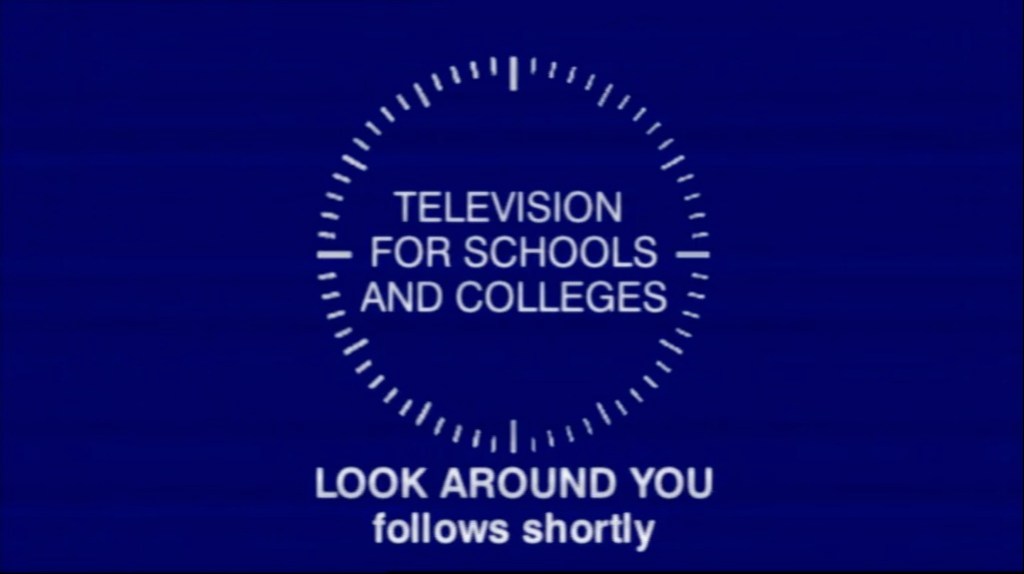
That is why the pace is so important. The series moves with the patience of the material it is copying. It leaves room. It does not slash its way through every scene trying to guarantee a laugh every three seconds. It lets the format do the lifting. There is a deep confidence in that. Modern comedy, and modern factual television too, often looks terrified of silence. Something always needs to be happening. Somebody must be reacting. A line must be underlined. Look Around You understands that old broadcast seriousness moved at a calmer, stranger speed. It sat with objects. It repeated itself slightly. It explained things in full. It assumed concentration. By preserving that pace, the show creates a frame in which nonsense can bloom properly. If you rush it, the joke becomes just another joke. If you let it unfold with full ceremonial seriousness, it becomes much funnier.
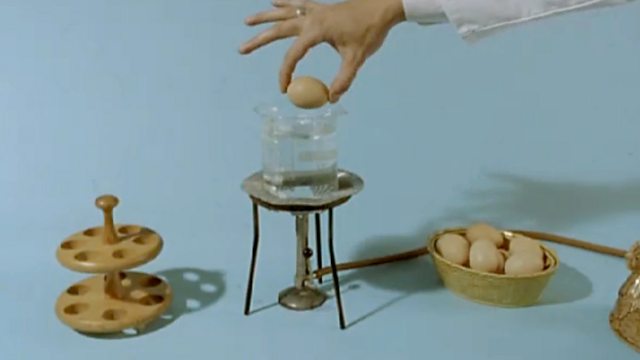
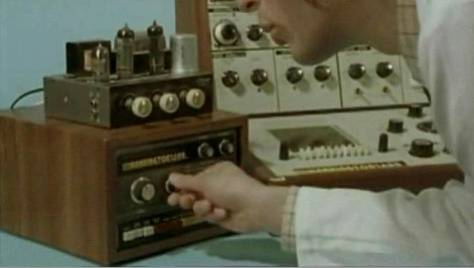
The object work is another huge part of the pleasure. Old educational television loved an item on a table. Some little device, sample, box, or component would be placed in front of the audience with total seriousness, as though by being shown in close up it had already acquired authority. Look Around You gets enormous mileage from this. It understands that a thing becomes funnier when it is treated not as a punchline but as a respectable piece of demonstration material. British television has always trusted the table demonstration. Show the viewer an object. Turn it slightly. Point to one section of it. Explain its function in calm tones. The whole culture of educational and practical broadcasting is sitting inside that move. Popper and Serafinowicz clearly knew this in their bones, because the show keeps using objects as if they are naturally self proving. That is why the silliness lands so well. It is procedural silliness, not random silliness.
There is something very British in that. American comedy, broadly speaking, often goes bigger, louder, or more aggressively weird. Look Around You is weird in a narrower, more domesticated way. It is weird in the manner of a teacher’s trolley wheeled into a room. Weird in the manner of a demonstration carried out by somebody who has no doubt at all that the demonstration deserves your full attention. Weird in the manner of a government leaflet. It is not chaos. It is tidy absurdity. It has had its hair combed and it’s tie done up by it’s mum. That is why it feels so precise. The whole series understands that the driest possible handling makes stupidity much stronger.
It also helps that the performances never flinch. Peter Serafinowicz and Robert Popper do not try to sell the gags with extra comic energy. They remove energy. They flatten their delivery into the proper texture. This is much harder than it looks. Lots of deadpan performances are secretly full of nudging, that little sense that the actor knows they are being clever and wants to make sure you know too. Look Around You mostly avoids that. It commits to a genuine performance style. The presenters and experts are not comedians doing old TV. They are people inside that world. They believe in the demonstration. They believe in the script. They believe in the importance of what they are showing you. That belief is what gives the show its shape.
The narration in the first series deserves separate credit. Nigel Lambert’s voice is absolutely central to why it works. If the narration were pushed a bit too broadly, or made obviously sinister, or played with too much knowingness, the whole thing would wobble. Instead it keeps exactly the right balance of calm, certainty, and mild public service professionalism. He sounds like the sort of voice the country once trusted to explain how things worked. Again, not in a dramatic way. Not a Churchillian national voice. Something lower, flatter, more practical. The voice of a man who has explained electricity, weather, road safety, and perhaps basic chemistry to schoolchildren across several decades without ever once needing to be the star of the event. That quality is perfect for the show because it means the words land as instructions rather than jokes.
The show is often called a cult comedy, which is fair enough, but that label can make it sound more niche than it really is. Its references are specific, yes, but the thing it is tapping into is broader than people sometimes admit. You do not need to remember a precise Open University broadcast or schools programme to recognise what Look Around You is doing. You only need to remember the feeling of being addressed by a screen that thought teaching was a public duty. That mode lasted a long time in Britain. The details changed, but the manner stayed familiar. A diagram. A demonstration. A table. A plain voice. A suggestion that this information is not optional. It is there in schools television, public information films, science shows, and all sorts of slightly worthy BBC and ITV factual formats. Look Around You condenses that shared broadcasting memory into a comic machine.
That, I think, is why people so often describe the show as something they feel they almost genuinely watched. Not because they remember the exact content, but because the format has lodged itself so deeply. The show feels less like an invention than like a recovered memory with the facts scrambled. It has the texture of something institutional. It seems as though it ought to have existed. This is much cleverer than ordinary parody. Ordinary parody points at a target. Look Around You recreates the emotional experience of the target so convincingly that your brain supplies part of the joke for free.
The “music” material is a good example of the series at its best. Music is already one of those educational subjects that can be taught in quite odd ways. Once you start trying to explain it, demonstrate it, classify it, and reduce it to systems for television, you are already halfway to something slightly absurd. The show knows this and pushes it just far enough. It does not leap into surrealism immediately. It behaves as though the explanations are part of a serious tradition of visual education. That is what gives the jokes weight. It does not just say “music is weird”. It says “here is how educational television would patiently damage music by trying to explain it too formally.” That is a much richer joke.
The same is true of the “ghosts” episode. A weaker show would go at the supernatural angle too hard and make the whole thing feel like sketch comedy in period costume. Look Around You instead treats the topic as if it belongs, completely naturally, in the same family as calcium or germs. The programme’s calm acceptance of its own categories is half the comedy. It is not shouting “isn’t this ridiculous?” It is saying “of course this deserves a proper educational treatment.” That tiny shift from comic disbelief to institutional confidence is where the series lives.One of the best things about the first run is that it never wastes time trying to broaden itself beyond the form. It knows exactly what it is. Eight small precise doses. There is no urge to over explain the premise. No need to build some larger universe around it. It is a format piece and a very pure one. Each episode comes in, establishes its subject, teaches nonsense with complete sincerity, and leaves before the method gets tired. That restraint is a massive part of the success. They could easily have taken the joke too far. Instead they understood that one of the strengths of old educational media was its modularity. A programme could simply exist as a programme. It did not need a great emotional arc. It only needed a subject and a method.
This is where the show differs from something like The Day Today, which the Guardian compared it to in terms of how sharply it lampoons its source. The comparison makes sense at the level of formal precision, but the energy is very different. The Day Today is hard, sharp, and aggressive. Look Around You is smaller and more patient. It is not trying to pulverise a target. It is content to inhabit one until the target exposes itself. That patience is the key difference. It is one of the reasons the show feels less like satire in the newspaper sense and more like a kind of disciplined comic archaeology.
The second series, when it arrives in 2005, is a different animal. It is easy to overstate the divide and pretend the two series barely belong together, but that is not really true. They share the same interest in television form, false certainty, and deadpan delivery. What changes is the target and the scale. The show moves out of educational film strips and schools modules, and into the world of studio science entertainment. It becomes bigger, brighter, more magazine like, closer to Tomorrow’s World and similar programmes in style. That is an intelligent move because it lets the creators go after a different branch of British television seriousness. The first series is about instruction. The second is about presentation. Series one teaches. Series two hosts. That difference gives the later run a different comic flavour.
The second series is sometimes treated as if it is simply broader and therefore less interesting. I do not think that is quite right. It is broader, certainly, and some people will always prefer the near monastic purity of the first series. Fair enough. But the second series is still doing something very smart. It is examining a different television promise. The old schools programme said, in effect, “sit still while we explain this properly.” The studio science format says, “come and enjoy the exciting future with us.” That is a genuine shift in how factual television wants to meet its audience. The second series builds comedy out of that shift. It captures the mild showbiz of expert culture, the self congratulating momentum of science TV, the breathless but still respectable sense that tomorrow is on its way and the BBC will guide you through it.
That opens up different pleasures. The cast broadens. The studio world is more social. Olivia Colman and Josie D’Arby join the main ensemble for series two, which gives the show a different texture and a bit more movement. The characters are presenters now, not just voices or educational functionaries. The jokes can therefore come from interaction as well as format. You get some excellent nonsense out of that. But the deeper pleasure is still structural. The show remains interested in how television certifies rubbish. It just does so now through studio spectacle rather than classroom procedure.
What the second series perhaps loses in purity it gains in variety. Each episode can tackle a larger category in a different way. “Music 2000”, “Health”, “Sport”, “Food”, “Computers”, then the live inventor final, all of it letting the show play with guests, demonstrations, product culture, TV experts, and that specific kind of programme that makes the future feel like something being unveiled in installments. Even the titles tell you what lane it is in. They sound less like school modules and more like events. This is a show about display now. About how television makes expertise entertaining without quite surrendering its seriousness.
The “Computers” episode is a good example of the second series getting its wider format right. Computers are one of those subjects that television has always struggled to make visually understandable, especially when the production wants to seem exciting but the actual material is half interfaces and half jargon. Look Around You knows that this gap between presentation and comprehension is fertile comic ground. Television often solves it by adding enthusiasm, extra graphics, product demonstrations, and a presenter’s smile. The series uses exactly that tendency against itself. The result is not merely a joke about old computers. It is a joke about how technology is packaged for public consumption.
Series two also shows that Popper and Serafinowicz were not one trick ponies. A lot of cult comedy gets trapped by the purity of its original idea. It can only do one format brilliantly. Look Around You proved it could reconfigure itself without collapsing. The specific pleasures changed, but the same comic discipline remained. It still trusted deadpan. It still trusted over serious framing. It still knew that the funniest possible move was to take nonsense and give it every institutional advantage.
That last point is probably the best single sentence explanation of the entire programme. The funniest thing Look Around You does is give nonsense every institutional advantage. It gives it a presenter. It gives it graphics. It gives it a demonstration. It gives it a script that assumes the matter is settled. It gives it a set. It gives it that old BBC kind of certainty. Once nonsense has all that behind it, it becomes much stronger than a throwaway gag. It acquires a comic dignity.The reason the show lasts is not just that the jokes are good, though they are. It lasts because the mechanism is so well understood. You can rewatch it and still enjoy how carefully the parts fit. The camera choices. The slightly wrong but convincing pacing. The objects. The costumes. The music. The sound of the room. The way the presenters hold themselves. Nothing is casual. The whole thing has been built by people who know that parody fails the moment it becomes lazy. They are not just sending up a period. They are reproducing television grammar.
That is why it is so often more rewarding than retro comedy that goes harder on obvious references. References are cheap. Accuracy is harder. Anybody can slap on an old title card and make a joke about moustaches. Look Around You had the discipline to ask what these programmes actually sounded like, how they were shot, how long they lingered, how information was structured, how experts moved, how authority sat in the room. That is where the quality is.
It is also worth saying that the series is one of the better examples of comedy that does not hate its target. It clearly enjoys old educational and science television. It finds it ripe for parody, certainly, but there is no sense that it regards the source material as beneath contempt. In fact, the reverse. It respects the structure enough to reproduce it properly. That is one reason the series feels richer than an easy spoof. It is not saying “what idiots they were.” It is saying “this form had a very particular seriousness, and that seriousness becomes extremely funny if you slide the content out of alignment.”That distinction stops the whole enterprise becoming smug. Smug comedy is deathly. The audience can feel when a show is really in love with its own superiority. Look Around You is too well made for that. It knows the old television it is parodying was often sincere, competent, and built with a kind of public purpose. It simply also knows that sincerity plus certainty plus bizarre information is a fantastic recipe for comedy.
The show’s cult afterlife makes perfect sense in that light. It was never going to be the biggest broadest hit, because it asks a certain amount from the audience. You have to enjoy form. You have to enjoy patience. You have to enjoy the joke being distributed across a whole style rather than concentrated into gag lines. But the people who get it tend to really get it, because there are not many comedies built this way. It scratches a very particular itch. Not just a taste for the absurd, but a taste for systems, tone, and the weird pleasures of official language.
Britain loves official language. Or rather, it is full of people who hate it and yet are deeply formed by it. Schools, forms, public signs, BBC presenters, local authority notices, all of it accumulates. There is a national comic tradition built around puncturing overconfident systems from the inside. Look Around You belongs firmly in that tradition. It is not anti science or anti education or anti expertise. It is anti the idea that institutional style itself guarantees sense. It is reminding you that a calm voice, a table, and a demonstration can make almost anything look respectable for a moment.And that moment is where the best laughs arrive.
What I admire most, though, is the show’s refusal to waste itself with cheapness and shortcuts. It does not explain the joke too much. It does not go chasing emotional resonance it does not need. It does not drop into conventional sketch rhythm to reassure the audience. It stays where it belongs. In it’s dry, official, educational form. That takes nerve. It also takes real understanding of comic form. The creators trusted that if they built the format correctly, they would not need to decorate it with extra noise. They were right.So yes, Look Around You is very funny. But it is funny in a way that still feels rarer than it should. It is not merely witty. It is not merely silly. It is formally exact. It understands that the style in which something is delivered can be as funny as the thing itself. It understands that British television once had a very particular way of explaining the world, and that if you copy that way exactly enough, you can make complete drivel sound like curriculum material.
That is the achievement. A show that takes old educational seriousness more seriously than almost anyone else would have bothered to, and by doing so turns it into one of the sharpest and driest comedies the BBC has produced. It began with eight short episodes on BBC Two in 2002, shifted into a six part studio format in 2005, and has carried on living because there is still nothing else quite like it.
Its greatness lies in a simple discipline.
It never laughs at its own joke before you do. It instead asks you to copy it neatly from page 28 of your textbook.


Leave a Reply