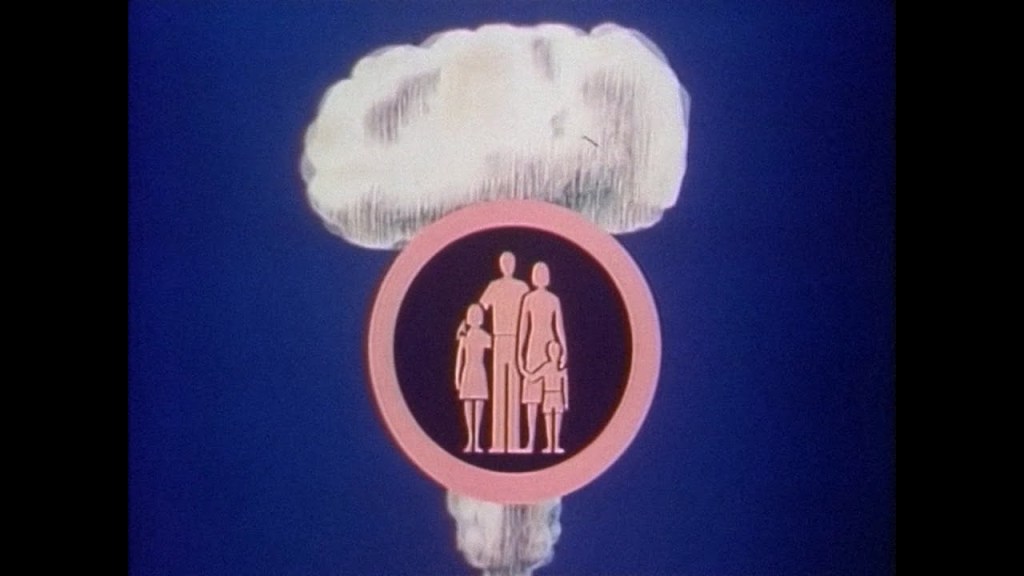
The bomb was almost always introduced politely. A voice. A pamphlet. A diagram. A man in a tie explaining where the furniture should go. In Britain especially, nuclear annihilation was so often dressed in the language of calm common sense that it began to sound like a species of parody. It was like singing a lullaby to a baby whilst pointing a loaded revolver at its head. The voice was meant to soothe. The reality behind it was incineration, radiation sickness, social collapse and the long humiliation of knowing that no bucket of water, no whitewashed window, no cheerful public information tone was ever going to bargain with thermonuclear fire. That is what gives old nuclear culture its rotten afterglow. The bomb was too large to be spoken about honestly, so it was translated into calm advice and domestic procedure. The result was not comfort. It was pathetic. Worse than pathetic, really. It was obscene.
That is the particular fascination nuclear culture still holds. Plenty of things are frightening in a straightforward way. A mushroom cloud is frightening. A ruined city is frightening. A Geiger counter clicking into panic is enough to make your hair stand up with primal fear. None of that needs explaining. What lingers, what lodges in the nerves and stays there for years, is the smaller and more sickening contradiction. The smile. The neatness. The household tone. The sense that civilisation, having built a weapon capable of erasing cities in a flash, still felt obliged to explain the matter as though it were a temporary inconvenience that could be weathered with planning, discipline, a spare matress to push against the door and a stout radio. There is something darkly funny in that, but it is the kind of funny that leaves a taste of metal in the mouth. You laugh because the alternative is to admit how naked the public really was.
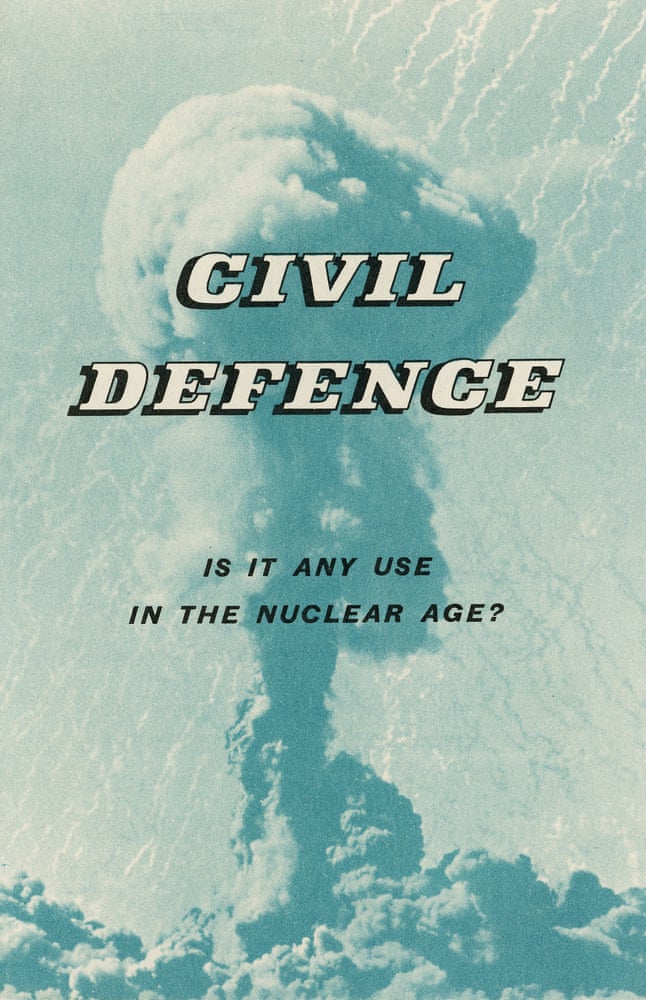
Nuclear dread becomes especially haunting when it is filtered through forms designed to reassure. That is the secret running through decades of civil defence films, government pamphlets, cinema, music and later video games. The horror does not begin with the blast. It begins earlier, in the classroom, in the living room, in the official voice. It begins the moment the unimaginable is made to sit still long enough for somebody to explain it. Culture keeps returning to this because the bomb is too large to think about directly. It has to be shrunk into shapes the mind can handle. A song. A cartoon mascot. A training film. An elderly couple making tea. A cheerful animation about your special attributes in a post nuclear wasteland. These are all ways of escorting the public toward the furnace without causing a stampede.
Britain had a special genius for this sort of tonal grotesquery. The country has always prized restraint, order, a decent voice in bad conditions. Sometimes that instinct is admirable. Sometimes it curdles into black comedy, and there is no black comedy blacker than the British state trying to explain how to survive a nuclear attack as though it were a burst pipe with geopolitical overtones. You can feel the old habits straining to stay upright. Keep calm. Follow instructions. Make do. Carry on. Do things properly. Even now, buried in old pamphlets and public information broadcasts, you can hear the voice trying to remain a voice of authority while history itself has become absurd. That is why the material still feels haunted. It preserves not simply the fear of death, but the embarrassment of official language brought face to face with an event it cannot possibly master.
The truly damning part is that the people producing these films and pamphlets were not fools. They were not cartoon villains either. They were administrators, planners, civil servants, broadcasters, people trained to reduce chaos to sequence. That is what makes the whole thing so grim. They were doing what institutions do when confronted with the unmanageable. They lowered the voice. They organised the information. They translated apocalypse into procedure. In that sense the tone was almost inevitable. A government cannot very easily issue a booklet saying there is no realistic household response to this and if the blast, heat or fallout do not get you, the collapse of everything else probably will. So instead you get diagrams. Lists. Timetables. Signals. Window preparations. Shelter advice. Instructions that are laughably, almost insultingly small when set beside the scale of the thing itself. The old civil defence voice now feels less like guidance than a performance of composure for its own sake. It was there to preserve order in advance of disorder. To stop panic before panic became contagious. To offer the public a script so that they would not have to stare directly into the void. Yet the very effort to soothe is what now makes the material so contemptible. The voice did not carry truth. It carried sedation. It asked people to remain emotionally manageable while the machinery of annihilation stood humming behind the curtain. It turned thermonuclear war into a matter of housekeeping. Into a problem of tins, water, doors, radios and bodily discipline. There is almost no crueler reduction than that.
The bomb, after all, annihilates proportion. That is one of the reasons it continues to fascinate artists. Most disasters can still be met with action of some kind. Fire brigades can fight fires. Hospitals can treat injuries. Floods recede. Wars, however horrific, still often leave some ordinary world standing in their wake. Nuclear attack breaks the ratio between human action and consequence. The scale is so vast, the chain reaction so violent, that the very idea of preparedness starts to look silly. Yet that silliness is exactly where the most potent art begins. Nuclear culture has always understood, whether consciously or not, that the real terror lies in the collision between ordinary forms and extraordinary violence. A household leaflet facing down a firestorm. A lullaby sung at the lip of the furnace. That is where the chill lives.
Take the old civil defence material itself. Much of it now survives as cultural evidence of a state trying to preserve dignity in a situation where dignity had already become threadbare. What people remember is not just the content, but the tone. The organised confidence. The almost patronising steadiness. The implication that if you keep your head and behave sensibly there is still a workable relationship between obedience and survival. That implication is what rots in hindsight. The more neatly the advice is presented, the more pathetic it becomes. It is the pathos of a ruler and pencil trying to command the weather. It is an umbrella held up against the sun.That pathos crosses into something morally uglier because the voice borrows the register of care. It sounds parental. Schoolmasterly. Kind, in its own hollow way. That is what makes the line about the lullaby and the revolver feel true. The tone suggests concern. The world behind the tone has already rendered that concern grotesquely insufficient. The public is being addressed as though the state still possesses meaningful shelter, meaningful continuity, meaningful answers. In many cases it did not. At best it had fragments. At worst it had performance. Somehow this makes the guidance now feel almost offensive. It mistakes the management of emotion for the management of reality.
Cinema understood this faster than official culture ever did, although it never got the feeling exactly right. The best nuclear films are never really about spectacle. They are about the collapse of language, procedure and habit under pressures that expose how pitiful they were all along. I’m going to menton the obvious here. This is why Threads remains so devastating. It does not merely show a city being torn apart. It shows the life of an ordinary British city passing through stages of tension, adjustment, misinformation and bureaucratic strain before the true scale of the event becomes undeniable. The horror of Threads is not only in what happens when the bombs fall. It is in everything that comes before, when systems are still trying to sound like systems.
That build up matters. The film understands that modern life is lived in announcements, routines and partial awareness. People hear things in passing. They half absorb danger. They carry shopping bags, bicker with family members, go to work, watch television, worry about money, and all the while history is moving toward the unthinkable. That is truer to real fear than any heroic apocalypse fantasy. Most people do not live inside constant cinematic dread. They live inside ordinary time, with dread leaking in at the edges. Threads gets that with an almost sadistic accuracy. The catastrophe is not initially presented as a single moment of revelation. It is administrative first. It enters by bulletin, by implication, by the flattening language of public systems that cannot say what is really coming.
Once the blast arrives, the old language is exposed as worthless. That is the great cruelty of the film. Sirens, announcements and plans suddenly look like paper toys. The social world does not merely suffer damage. It loses grammar. The things that linked action to outcome start coming apart. Medical help becomes meaningless. Food becomes unstable. Streets become hostile matter. Institutions do not rise to the occasion. They unravel. In that sense Threads is one of the finest ever films about the humiliation of official tone. It drags the voice of order into a world where order has burned away.
Even then, though, what makes Threads unforgettable is not simply the scale of the suffering. It is the drabness of it. The film does not give apocalypse the glamorous silhouette of an action sequence. It gives you municipal collapse, bodily ruin, the wasting away of language and education, the shrinking of horizons. It makes nuclear war feel degrading. That is important. So much official culture around the bomb tried to preserve dignity. Threads shows what happens when dignity is blasted into the gutter. All that remains then is the memory of the soothing voice, and how laughably pathetic it sounded.When the Wind Blows cuts even deeper because it takes the whole horror and pushes it through the smallest aperture imaginable. An old couple. A cottage. Instructions. Familiar routines. Faith in official advice. It would be easy to mock Jim and Hilda, but that would miss the point entirely. They are not there to be laughed at from above. They are there to break your heart. They are what happens when decent, trusting, ordinary people take institutional language at face value. They embody the old belief that the government would not issue guidance unless that guidance stood in some sane relationship to reality. That belief is precisely what the film destroys.
What makes the film so painful is that the domestic setting refuses to let nuclear war remain abstract. The garden, the kitchen, the table, the tea, the little routines of home life all continue for a while, because home life is what human beings actually have. Nobody lives inside strategy papers. Nobody inhabits deterrence doctrine. People inhabit rooms. They arrange blankets. They boil kettles. They mishear the radio. They put trust in printed instructions because instructions have always belonged to the adult world of sensible things. When the Wind Blows takes that entire register of domestic normality and lets radiation seep through it. It is hideous precisely because the film is so tender toward what is being destroyed.
The old couple try to do everything properly. That phrase matters. Properly. It is one of those deeply British words that carries class, duty, decency and embarrassment all at once. To do something properly is to preserve a moral order through correct conduct. It is why the title of this essay fits the subject so well. The whole absurdity of nuclear civil defence lies in the implication that there still is a proper way to behave while walking toward obliteration. Put this here. Sit over there. Wait patiently. Trust the signal. Stay inside. Keep calm. Do things properly whilst the world ends. It would be funny if it were not so revolting.And that is the centre of the matter. The official voice was not simply false. It was degrading because it reduced people to well behaved recipients of their own likely destruction. It did not ask them to think politically, morally or historically about the insanity that had produced the bomb. It asked them to become manageable. To keep the house in order while history loaded the chamber. This is why so much of the material now feels like a sneer disguised as care. Even if that was not the intention, it is how the voice lands. A species of bureaucratic bedside manner offered to the public in advance of firestorm.
The same contradiction surfaces in The War Game, though in a more openly confrontational mode. Where civil defence guidance tried to preserve the illusion of state competence, The War Game tears at that illusion until the fibres show. It understands that the problem is not simply that nuclear war is bad. That would be obvious to a child. The problem is that the institutions meant to contain the event are themselves implicated in a fantasy of containment. The old language of preparedness starts sounding like an accomplice. Every calm phrase becomes suspicious. Every measured tone seems to hide either self deception or outright evasion. By the time the film has finished, the entire culture of civil defence looks not brave but puny.
Kubrick’s Dr. Strangelove arrives at a similar truth from the other side, through ridicule. The brilliance of the film lies in how naturally apocalypse grows out of systems that still think of themselves as rational. Men in rooms. Procedures. hierarchies. Correct terminology. Strategic vocabulary. The bomb is not born from chaos in Kubrick. It is born from organised absurdity. That is a crucial point, because it links the war room to the pamphlet. Both rely on the same delusion, namely that systems remain systems even when the logic beneath them has become deranged. The laughter in Dr. Strangelove is so harsh because it reveals how near rational planning can sit to total lunacy without changing its accent.
If cinema gave the public ways to watch the old reassuring voice collapse, music let people inhabit nuclear dread bodily. A song can do something a pamphlet never can. It can carry fear through the nervous system. It can make it repeat. It can attach it to rhythm, to beauty, to public memory. Nuclear songs have often worked by binding dread to forms that should not be able to contain it. That tension is part of their power. Pop, after all, is meant to move, to seduce, to circulate. Once it becomes infected with apocalypse, the result is often more disturbing than any solemn speech. Two Tribes is the obvious giant here, and there is no point pretending otherwise. The record turns nuclear fear into thunderous pop theatre. It is vast, aggressive, ecstatic and cold. The brilliance of it lies in the refusal to treat dread as a private mood. The fear becomes communal, chart bound, shouted, danced to. That was one of the strangest truths of the Cold War years. The bomb had moved so far into culture that it could become pop material without losing its sting. In fact, the pop format could sharpen it. A catchy chorus is harder to shake than a policy statement. Nuclear fear in pop form becomes sticky. It follows you out of the room.
There is something almost gleefully indecent about that. The world hangs over the abyss and the song becomes a hit. Yet that indecency is honest in its own way. It admits what official reassurance never could, which is that modern culture metabolises fear through performance. Through spectacle. Through repetition. Through shared feeling. The bomb had already entered the bloodstream of the age. Two Tribes simply made the bloodstream audible. It did not pretend there was a set of sensible instructions for how to survive it. It let the panic become style, which is somehow truer.
Kate Bush’s Breathing does the opposite. It turns away from the public and enters the womb. Few songs have made nuclear dread feel so intimate. The unborn narrator senses the threat outside, not as doctrine or strategy, but as contamination of breath itself. The scale of the event collapses inward until it is felt at the level of bodily possibility. That move is devastating because it exposes the true obscenity of the bomb. It is not merely a matter of cities or alliances or military capacity. It is an assault on the future before the future has even arrived. Bush does not need a civil defence voice to make this clear. She makes the listener feel what those voices were always trying to soften, namely that nuclear war is a crime against the very conditions of life.Then there is Russians, which is perhaps the most sincere plea of the lot. No black comedy, no cartoon, no lurid theatre. Just the attempt to cut through ideology with a simple appeal to common humanity. It is stately, almost ceremonial, and that composure is what makes it work. Where official reassurance tried to manage public feeling, songs like this reclaim feeling from the machinery of strategy. They do not pretend the bomb can be made domestic or manageable. They stand in the shadow of it and try to salvage some human scale from the madness. That is an entirely different use of calm. One calm is bureaucratic sedation. The other is moral refusal.
The crucial thing is that music never really shares the tone of state guidance, even when it sounds measured. Songs about nuclear fear are not trying to prepare you to behave correctly in a shelter. They are trying to express what that shelter advice cannot contain. Rage, grief, tenderness, disgust, panic, fatalism, absurdity, longing. Music expands the emotional range that official language compresses. That is why the best nuclear songs remain alive while so much civil defence material now reads like accidental satire. The songs know they are dealing with a wound. The pamphlets pretend they are dealing with a procedure.
Video games inherited the entire archive of this contradiction and turned it into explorable space. No series does more with it than Fallout. The great artistic move of Fallout is not simply that it sets a game after nuclear war. Plenty of works have done that. Its true stroke of genius is that it preserves the smile. The retro optimism. The mascot. The training video tone. The bright little educational rhythm of a world that once believed good design, good science and good planning would secure the future. Then it leaves all that intact amid ruin. The result is one of the most potent hauntological environments ever made.In Fallout, the bomb has already dropped, but the propaganda has not quite realised. Vault Boy still grins. The icons still look trustworthy. The old corporate promises still echo through terminals, posters and animations. The player moves through the corpse of reassurance. That is why the world is so memorable. It is not only devastated. It is tonally delayed. Reality has caught up with itself in the form of ash, mutation and wasteland, but the aesthetic language of preparedness lingers like a bad joke told too late. The old smile still hangs there, yellowed and intact, while everything beneath it has collapsed.
That smile is important because it belongs to the same family as every calm public information voice that ever tried to make nuclear war look discussable. The educational cartoons in Fallout are funny because they inherit the grammar of instruction and drag it into hell. Here are your attributes. Here is how to survive. Here is how to think about the future. Except there is no future in the old sense, only a series of radioactive afterlives moving through the shell of a culture that sold security like a breakfast cereal. The cheerfulness becomes necrotic. That is the word for it. The lesson remains, but the teacher is dead and the classroom is on fire.Games can do something here that films cannot. They force the player to participate in the remains of legibility. A film shows you the ruins of reassurance. A game invites you to navigate them, use them, trust them for a while. The menus, the statistics, the retro instructional fragments all create little islands of order in a world otherwise defined by disorder. That has a psychological effect. You feel the seduction of clarity even while knowing clarity has failed. In this sense Fallout understands something extremely dark about modern culture. Human beings will cling to readable systems long after the reality those systems were designed for has vanished.
That idea runs well beyond one game series. Nuclear and post nuclear art keeps returning to the remains of procedure because procedure is what civilisation uses to reassure itself that reality can be handled. Recipes, timetables, emergency plans, operating manuals, school instructions, government notices, warning systems. These are the scaffolding of ordinary confidence. The bomb makes them look ridiculous, but it also reveals how badly we need them. Even after catastrophe, people still crave sequence. They still want to know where to stand, what to carry, what the signal means, how long to wait. That hunger for guidance is one of the saddest things about us. It is also one of the most human.Which is why the calm official tone continues to fascinate artists. It is a perfect symbol of civilisation at the point of humiliation.
You can hear in it both vanity and helplessness. The voice wants to remain the voice of adulthood, of knowledge, of social continuity. Yet the event it addresses strips all that away. The voice becomes a ghost of authority rather than authority itself. It is still there, still speaking, still saying sensible things in sensible order, but the ground beneath it has gone. That is what makes the material feel haunted. It is confidence without power. Care without rescue. Instruction without a plausible object.The household remains the most important stage for all this because the home is where abstract horror becomes intimate. Nobody experiences thermonuclear war as an abstract chart. People experience danger through walls, windows, doors, bodies, pets, children, kitchens, gardens and radios. That is why the domestic setting carries so much charge in nuclear culture. The bomb becomes unbearable when it is imagined in relation to rooms. A government can speak in megatonnage and deterrence doctrine all day long. One old couple waiting in a shelter they trust will tell you more about the moral obscenity of nuclear reassurance than an entire archive of strategic writing.
There is also something uniquely humiliating about the class tone of much British reassurance. The polite household voice often implied that survival depended, at least in part, on being orderly, stoic and sensible. A well behaved citizen might fare better. That implication is rotten. It suggests that correct conduct preserves agency even where agency has largely evaporated. It slips moralism into the gap where honesty should be. Behave properly. Do not panic. Follow the instructions. Listen carefully. In any lesser emergency that may be sound advice. In the face of a hydrogen bomb, it becomes almost a taunt.
This is where the pathetic quality becomes essential. Without that word, the material risks sounding grandly eerie when in truth much of it is humiliatingly small. Pathetic does not mean uninteresting. It means that the state’s performance of competence becomes visibly inadequate. One can feel pity and contempt at once. Pity for the human need to say something, anything, in the face of the unspeakable. Contempt for the thinness of the reassurance, for the implicit dishonesty of its tone, for the way it asks the public to confuse calmness with actual protection. The voice is steady because steadiness is all it has left.Yet that very inadequacy is what gives nuclear culture its peculiar power. If the guidance were simply monstrous, it would be easier to dismiss. What unsettles is that it remains recognisably human. The pamphlet really is trying, in its bleak way, to offer some shape, some sequence, some possibility of action. The problem is that the shape is absurdly unequal to the event. That is what makes the whole thing feel tragic and insulting at the same time. The public is handed little scraps of order in place of real safety. It is offered manners instead of salvation.
You can see the same dynamic in countless smaller cultural moments. The old classroom television wheeled into place. The documentary narrator with clipped vowels. The tidy diagram on a white page. The jingle with a smile behind it. The retro educational animation in a game about irradiated wasteland. Even the use of warm or cheerful music over images of destruction plays into the same contradiction. The culture keeps trying to cushion the blow with familiarity. It keeps insisting on a recognisable surface. That surface is not meaningless. It is how the horror gets in. The familiar is the delivery mechanism.That may be the darkest lesson of all. Human beings often do not encounter the unthinkable in its own pure form. We encounter it through voices we have been trained to trust. Through teachers, broadcasters, parents, institutions, songs, toys, screen icons and household language. That is why nuclear culture remains such fertile ground for hauntology. It is not simply about fear of the past. It is about the lingering unease produced when the forms of care and order are revealed to have been disastrously unequal to the world they claimed to describe. The ghost is not in the blast. The ghost is in the smile that came first.
How, then, should the bomb be remembered in culture? Not only as the flash over the city, nor merely as the wasteland afterwards. It should also be remembered as a crisis of tone. A moment when civilisation exposed something shameful about itself. It could build a weapon fit for myth, then address that weapon in the language of household management. It could point a revolver at the species and clear its throat politely before speaking. It could call for calm while preparing no genuine refuge from the fire. That is why so much of the old material still glows with such a nasty little light. It shows a culture attempting to preserve its bedside manner while standing over the bed with blood on its hands.And yet artists keep returning to it because there is something bitterly compelling in that spectacle. The soothing voice before annihilation reveals modern life in miniature. We are creatures of procedure, of ritual, of explanation. Faced with the unmanageable, we produce manuals. We produce slogans. We produce songs. We produce cartoons and icons and briefings and dramas and games. We try to turn terror into format because format is what makes reality feel graspable. The tragedy of nuclear culture is that the format remains beautiful, orderly or moving long after the reality beneath it has become impossible to survive.
So the calm reassuring voice was never merely eerie. Eerie is too soft a word for it. It was pathetic, laughably so, but in a way that exposes something deeply pitiful about civilisation itself. Here was a culture so committed to the performance of order that it kept issuing lullabies at the very edge of the furnace. Here was a state that could not tell its people the full truth, so it gave them diagrams and a mild voice instead. Here were citizens asked to do things properly whilst the world ended around them. The bomb was real. The guidance was real. The gap between them was a chasm so wide that the only honest responses left were horror, contempt and that thin, involuntary laugh that comes when the mind finally recognises how obscene the whole arrangement was.
That is why these films, songs and games still matter. They preserve the moment when reassurance became one of horror’s most effective masks. They show a civilisation trying to tuck the public in before the blast. They reveal the voice of care as something compromised, brittle and almost unbearably small. The bomb may be the obvious monster in the room, but the thing that lingers longest is the person beside it still speaking softly, still trying to sound sensible, still pretending that if everyone remains calm and follows the instructions there might yet be a proper way through. There was not. There never was. And the old voice, for all its neatness and composure, knew far less than it pretended.That is the true hauntology of nuclear culture. Not the ruins alone, and not the nostalgia of old media, but the afterlife of false reassurance.
The dead voice that still speaks from the archive, asking us to stay put, stay sensible, stay tidy, while history loads the chamber.


Leave a Reply