A restaurant with thirty tables is not one room.
It only looks like one because the chairs match, the lighting has been bullied into softness, and someone has spent the afternoon lining up cutlery with the severity of a minor military power. To the customer, it appears as a single civilised space. A dining room. A restaurant. A place where food arrives, wine is poured, people talk, laugh, flirt, complain, over order, under tip, and pretend they understood the specials.
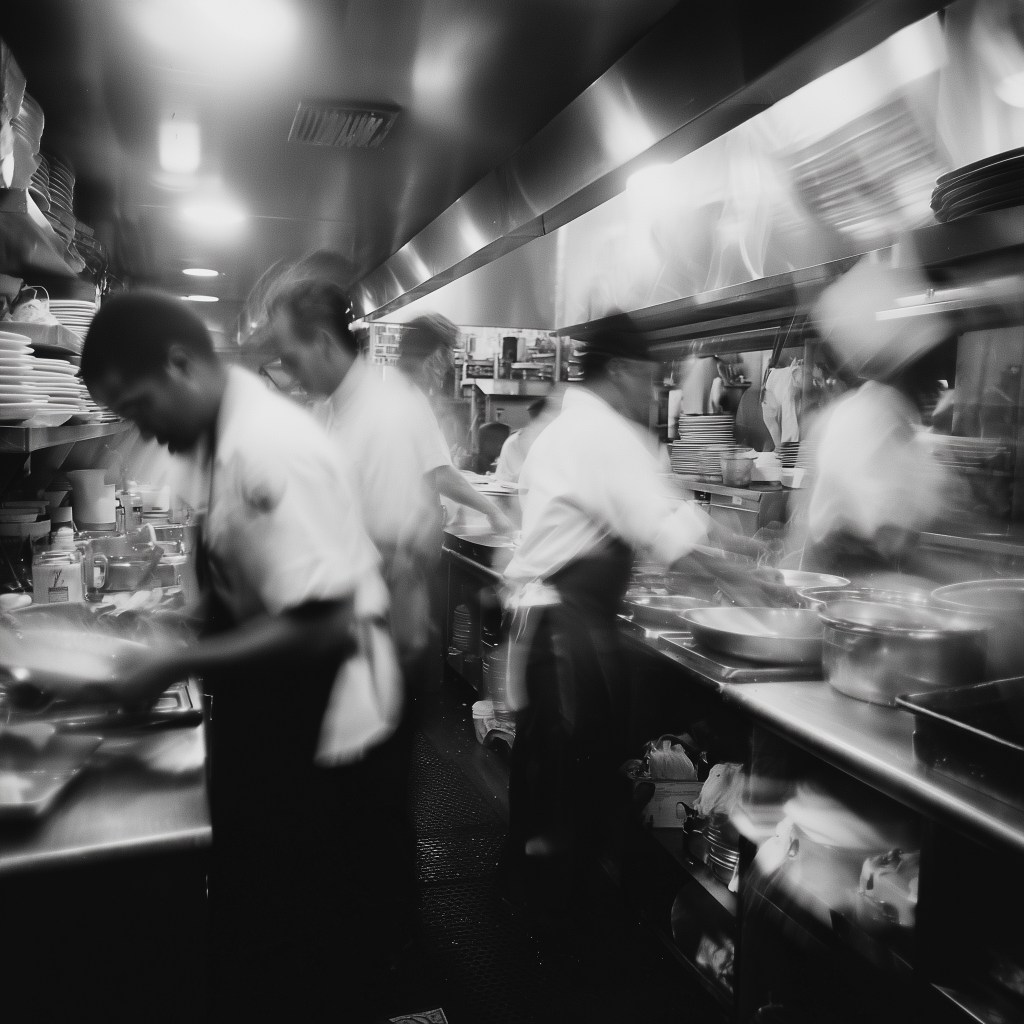
But anyone who has worked the floor knows the truth.
A restaurant with thirty tables is thirty separate weather systems trapped under one ceiling.
Each table has its own pressure, temperature, language, class structure, hunger, anxiety, humour, secrets and private law. Table one is celebrating too loudly because silence would let something in. Table two has already decided the evening is expensive and is now looking for evidence. Table three is on a first date, both of them using the menu as a shield, a mirror and a mild intelligence test. Table four is a family meal where one person has become the emotional radiator for everyone else. Table five is easy, warm, grateful, and every waiter crossing that section feels a tiny private blessing. Table six contains a man who has mistaken volume for charm. Table seven is still reading the wine list as if it contains a legal loophole. Table eight has gone cold between mains and dessert, though nobody outside the table knows why.
To the guests, it is dinner.
To the staff, it is meteorology.
This is the first unbelievable thing about fine dining, and perhaps about hospitality in general. The room is never merely full. It is alive in fragments. A hundred and fifty diners may sit inside the same building, under the same lights, eating from the same menu, listening to the same carefully chosen music that nobody must actually notice too much. Yet each table is having a completely different evening. One is beginning a love story. One is ending one politely. One is performing wealth. One is quietly worried about the bill. One has saved for months and is absorbing every detail with the seriousness of a pilgrim. One will not remember what they ate by tomorrow. One is trying to forgive someone. One is trying to be forgiven. One is already drunk enough to believe the whole room is improved by their commentary.
The restaurant holds them all.
That is the trick. That is the labour. That is the strange human art hiding beneath the linen.
Fine dining is usually discussed through its obvious surfaces. Plates, technique, wine, ingredients, service, luxury, theatre, cost, status, the usual parade of polished nouns. But the deeper drama sits in the room before the food even arrives. It is the management of simultaneous private worlds. Every table believes itself to be the centre of its own evening, because to them it is. The staff must accept this, indulge it, govern it, and somehow keep all these little kingdoms from invading one another.
A good dining room is not peaceful because nothing is happening.
It is peaceful because an enormous amount is being prevented from happening.
The waiter approaching table twelve is not simply bringing water. They are taking a reading. Has the mood lifted since the last course. Has the argument cooled. Is the man still talking over her. Is the birthday girl enjoying herself or has the family made the evening about themselves, as families often do with the confidence of a long running theatre company. Has the vegan tasting menu landed well or is someone smiling with the blank patience of a hostage. Is that guest looking around because they need service, because they are impressed, because they are irritated, or because they are about to ask where the toilets are despite having walked past them twice.
This is hospitality as surveillance, but with better manners.
Not cruel surveillance. Not the cold institutional kind. More intimate than that. Stranger too. Staff read diners constantly, not to dominate them, but to protect the evening from becoming itself too loudly. A good waiter sees the tiny collapse in the shoulder before the complaint. The glance at the empty glass before thirst becomes conscious. The cutlery placed together before the guest starts looking abandoned. The menu closed with decision. The menu held open in fear. The pause after the bill arrives. The bright voice that means someone is furious and trying to remain elegant.
Guests think they are being served.
They are also being interpreted.
This is where the sonder begins to sharpen. Not simply in the cosy realisation that everyone has a life. Of course everyone has a life. Even the man asking whether the sauce has gluten while pointing at butter has a life, though one must work harder to imagine it generously. The stronger realisation is that all these lives are being read by other lives in real time, while almost nobody notices the reading happening.
The dining room is full of invisible communication.
A runner crosses the floor with three plates and receives a look from a waiter near the window. That look says table fourteen is not ready. The runner slows half a beat, turns the movement into something natural, and the food does not arrive into an awkward toast. A manager glances at a wine glass, then at the sommelier, and the top up happens before the guest knows they wanted it. A server at the coffee station hears the pitch of laughter change at table nine and knows they can be approached now. Another sees table seventeen fall silent and understands that interrupting would be vandalism. Across the room, two members of staff exchange one tiny movement of the eyes and an entire decision passes between them, clean as a wire under carpet.
The diners do not see this.
They are not meant to.
That is why hospitality can feel ghostly from the inside. Staff move through the room as a second population, visible but not fully seen. They appear, disappear, carry messages, remove evidence, refill, reset, redirect, absorb, soften, delay, accelerate, and vanish again. The customer experiences this as atmosphere if it is done well. They do not see the staff nervous system firing beneath the skin of the room.
Fine dining is full of these silent ghosts.
Not ghosts in the theatrical sense. No pale child in a corridor. No candle flicker. No Victorian woman in a nightdress making everyone regret buying the old house. These are working ghosts. People moving around the edges of other people’s memories before those memories have even formed. A waiter may be present at the beginning of a marriage, the end of a relationship, the last birthday before an illness is named, the first meal after a promotion, the awkward dinner where a son brings home someone the parents have already decided not to like. The waiter might remember only table number, wine choice, and the fact that one guest was difficult about the temperature of the room.
That gap is astonishing.
To the table, it is life.
To the staff, it is section management.
Hospitality lives inside that gap and pretends not to be overwhelmed by it.
A dining room at full tilt is a miracle of partial knowledge. Nobody knows everything. The kitchen knows tickets, timings, allergies, table numbers, modifiers, pace, pressure, perhaps a fragment of the room’s mood carried back by front of house. The floor knows faces, tones, pauses, empty glasses, coats, bags, who is paying, who thinks they are paying, who wants to pay, who must not be allowed to pay because that would start a small domestic war. The guests know their own evening, or think they do. Management knows spend, flow, problems, complaints, recovery, reputation, the table that might leave a good review, the table that looks like it has brought a grudge from home and is searching for somewhere to hang it.
No single person possesses the restaurant.
The restaurant exists as overlapping fragments of awareness.
That is why service can feel so theatrical and so military at once. The dining room performs softness while operating on discipline. Timing matters. Tone matters. Sequence matters. The wrong interruption can bruise a table. The wrong delay can sour it. Clear too early and people feel hurried. Clear too late and they feel forgotten. Explain too much and dinner becomes homework. Explain too little and the kitchen’s work disappears. Smile too brightly at the wrong table and you become part of their problem. Withdraw too much and you leave them alone with it.
Fine dining is not only the delivery of food.
It is the regulation of emotional temperature.
That sounds grand, but it is practical. Every table has a threshold. The staff must find it. Some tables want warmth and will open like flowers if given the smallest human spark. Some want discretion and will punish cheerfulness as if it were a parking offence. Some tables need leading gently through the menu because unfamiliarity has made them vulnerable. Some need to be left alone because the meal is only the visible layer of a conversation that has been waiting for months. Some need containing because they are turning their money into weather.
This is why the same sentence can succeed at one table and fail at another.
“Are you enjoying everything” can sound caring, intrusive, pointless, charming, needy, professional, scripted, or absurd depending on the climate into which it lands. The words matter less than the reading. Service is not a script. It is a diagnostic tool disguised as politeness. A strong waiter is therefore not merely nice. Nice is cheap. Nice can be trained into someone by Thursday and forgotten by Saturday. Good service requires judgement. It requires the ability to walk into a table’s atmosphere and know whether to bring humour, silence, reassurance, speed, ceremony, explanation, distance, or bread. Usually bread. Bread is diplomacy in a basket.
A dining room works when enough of these judgements happen correctly and invisibly.
This is the hidden cruelty of hospitality. When it is done well, it disappears. The guest does not think, how beautifully this room’s emotional ecosystems are being managed by underpaid adults with peripheral vision and sore feet. They think, what a lovely evening. That is the correct outcome. It is also slightly unfair, which is how civilisation gets most of its best tricks done. The customer should not have to see the machinery. That is the gift.
But the machinery is extraordinary.
A good floor team develops a shared language that never needs to be formally taught because it is learned under pressure. The eyebrow. The half nod. The still face. The quick glance toward the pass. The hand held low to say wait. The smallest shake of the head to prevent a plate going down at the wrong moment. The waiter who appears at the side of another member of staff not because they were called, but because the room asked for them in a tone only they could hear.
This is the ghost language.
It happens beneath conversation. It passes behind birthdays, anniversaries, business dinners, first dates, wakes, family truces and financially brave decisions from the wine list. It is often the reason the room feels calm. The guests hear laughter, cutlery, glass, music, the low public murmur of people pretending to be slightly better versions of themselves. Underneath that is another soundless room, made of glances and timing.
There is something funny and almost spooky in this. A table may believe it is private while being gently held in the awareness of three staff members. Not judged, necessarily. Sometimes judged, because staff are human and humans need hobbies. But mostly held. Watched in the old sense of the word. Watched over.
That is an underrated distinction.
The best hospitality is not the customer being stared at. It is the customer being quietly accounted for. Their evening has entered the staff’s map. Their glass, their pace, their allergy, their mood, their table position, their tiny signs of discomfort, their likely next need. They become part of a system designed to make them feel as though no system exists.
This is why bad service feels so lonely.
A neglected table has fallen off the map. You can feel it. It is not only that the wine is empty or the plates remain too long. It is that the room has stopped knowing you are there. In a good restaurant, even waiting can feel intentional. In a poor one, ten minutes can feel like exile.
There is a kind of social death in trying to catch a waiter’s eye and failing.
Fine dining, at its best, prevents that death with grace.
But it must do so for every table at once. That is the absurdity. Thirty tables, thirty climates, thirty versions of significance. The couple by the window may be having the most important conversation of their year. The table of six near the wall may be creating a memory they will repeat for a decade. The elderly man dining alone may be returning to a place he once visited with his wife. The group in the centre may be celebrating a promotion that required private humiliation to achieve. The young pair sharing starters may be pretending not to calculate whether they can afford dessert. The woman laughing too brightly may have decided before she arrived that the relationship is over.
All of this sits inside the same room as the man asking if chips come with it.
That is hospitality. Sublime and daft, often in the same sentence.
The staff cannot know every story. They would be useless if they tried. The work depends on selective empathy. Too little and service becomes cold. Too much and the staff dissolve. A waiter must care without absorbing, notice without prying, respond without becoming part of the table’s life. They must recognise significance while keeping enough distance to clear the plates.
That distance is not heartlessness.
It is professional mercy.
The room needs staff who can hold emotion lightly. A birthday should matter, but it cannot be allowed to matter so much that table nineteen misses dessert. A complaint should be taken seriously, but not allowed to poison the whole section. A grieving table should be handled with care, but the restaurant still has orders, timings, coffee, bills, resets, the next wave. Hospitality is full of tiny emotional handovers. This matters, now that matters, now this again. The staff must keep moving through other people’s lives without getting caught in them.
There is edge in that because it reveals something unsentimental about care.
Care is not always soft. Sometimes care is sequencing.
Sometimes care is not interrupting. Sometimes care is noticing that a table does not want a conversation about the dish, they want the dish placed down and the world kept away for five more minutes. Sometimes care is taking the complaint seriously while knowing the complaint is not really about the food. Sometimes care is removing a wine glass because someone has had enough and nobody at the table wants to say it. Sometimes care is letting a lonely diner keep their dignity by not over serving them emotionally.
Good restaurants understand this. Bad restaurants think service means either smiling hard or explaining things until the guest’s soul leaves through the nearest fire exit.
The true theatre of fine dining is not the plate arriving under a cloche, though that can be pleasing in the way all controlled reveals are pleasing. The real theatre is the invisible staging of the room. Who gets approached and when. Which table is left in peace. Which table is lifted. Which table is watched. Which table is slowed down because the kitchen needs breathing room. Which table is sped up because they are beginning to curdle. Which table has become dangerous because one person has started performing to the whole room.
A dining room is an ecosystem, but it is not a gentle nature documentary ecosystem. It is not otters, mist and respectful narration. It is closer to a coral reef that serves Malbec. Bright, fragile, predatory, mutually dependent, beautiful from a distance and full of little mouths when you look closely.
Every table affects the others. A loud table changes the climate for the quiet one beside it. A delayed course can create ripples through the pass. A complaint pulls a manager from another problem. A birthday song, if allowed, rewrites the dignity of the entire room for thirty seconds. A table camping over coffee can break the seating plan. A guest arriving late does not merely arrive late. They distort time around them. Their lateness enters the kitchen, the next booking, the staff break, the mood of the host, the patience of the chef, the table waiting at the bar. No table is an island, though some behave like offshore tax arrangements.
This is why staff watch the whole room, not just their section. The room is a living system. The section is merely the part of the forest currently on fire.
And still, the customers are mostly unaware of it. They are meant to be unaware. Their job is to inhabit the surface. They sit, choose, taste, talk, remember, complain, fall in love, drift apart, overpay, under notice, become briefly radiant, become briefly unbearable. The staff move among them like interpreters of a language nobody admits they are speaking.
There is a strange tenderness in this invisibility. The diners are allowed to believe in the simplicity of their own evening because other people are absorbing the complexity around it. That is hospitality at its most elegant. Not servility. Not fuss. Not theatrical grovelling. A quiet redistribution of burden. The guest should not need to know the room is complicated. The staff know on their behalf.
This is also why hospitality can become addictive to those who understand it. Not because the work is always pleasant. It is often exhausting, underpaid, physically punishing and spiritually improved only by coffee and sarcasm. But there is a peculiar satisfaction in reading a room correctly. In seeing the shift before it happens. In catching the glass before the guest looks for it. In timing a table so cleanly that they never feel managed. In exchanging one glance with another member of staff and knowing the room has been saved from a small future ugliness.
It is influence without announcement.
It is power disguised as courtesy.
That is the part fine dining rarely says out loud. The staff are not passive servants moving through a customer’s story. They are active editors of the evening. They cut awkward pauses. They soften transitions. They delay bad timing. They amplify celebration. They protect intimacy. They manage vanity. They contain irritation. They rescue the guest from the guest, which is often the most delicate service of all.
And when it works, the guest leaves believing the evening simply happened.
It did not simply happen.
It was conducted.
The sonder of the restaurant is not only that every diner contains a whole invisible life. It is that those invisible lives are constantly passing through the invisible labour of other lives. A hundred and fifty guests sit inside their own private films while a handful of staff move between the scenes, keeping the lighting steady, cutting the noise, carrying messages, preventing collapse, preserving the illusion that dinner is simple.
There is something almost cosmic in that, though it wears sensible shoes.
At the end of service, the room changes back. The weather systems disperse. The loud table leaves. The cold couple steps into the street. The first date either becomes a second date or a story told with a wince. The family carry their old tensions home. The bill is settled. The glasses are smeared. The napkins lie folded in defeat. The flowers have heard too much. The staff begin returning the room to innocence.
This is the final trick.
A dining room must forget everything in order to be ready for more.
The tables are wiped. The chairs are straightened. The crumbs are swept. The same room that held thirty private climates is made blank again, as if none of it happened. Tomorrow, new strangers will arrive and believe the room has been waiting peacefully for them. In a sense, it has. In another, it has been dreaming in table numbers.
That is the first haunting of fine dining. Not the old building, not the candlelight, not the music, not the memory of a dish after it vanishes. The first haunting is the room itself, full of lives that briefly gather, touch nothing permanently, and leave behind only atmosphere.
A restaurant with thirty tables is not one room.
It is thirty weather systems, a hidden staff nervous system, a hundred and fifty unfinished stories, and a nightly act of collective pretending so graceful that most people mistake it for dinner.


Leave a Reply