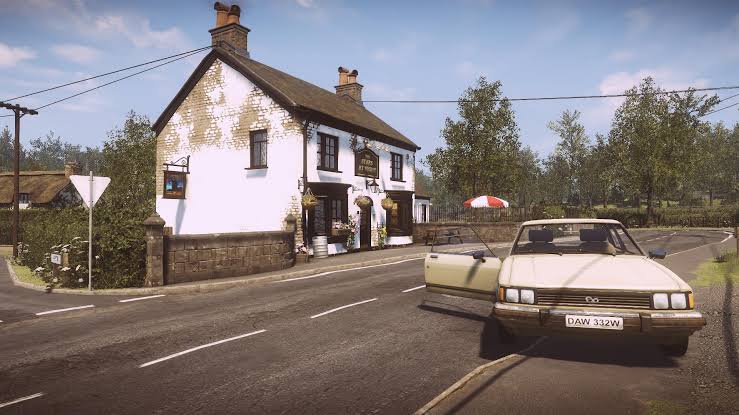
A cigarette is still burning.
Not a relic. Not a clue found years later beneath dust and sentimental cobwebs. Burning. Now. A thin orange point of life at the end of something that should be in somebody’s hand. The ash is still holding. The smoke is still twisting upwards. The room still has that stale little pub perfume of tobacco, carpet, beer, old wood and everyone’s bad decisions soaked into the wallpaper.
The half drunk pint on the bar is still cold.
Condensation on the glass. Beer not yet flat. Not abandoned in the poetic sense. Not left behind long enough for time to come in and make it respectable. Someone was drinking it a minute ago. Someone was leaning there. Thinking something. Avoiding someone. Waiting for someone. Talking absolute rubbish with the confidence only pubs can provide.
Outside, a car is idling with the drivers door open.
No driver.
No footsteps.
No crash.
No body.
Just the engine ticking over for nobody, burning fuel in a world where transport has become a joke.
No… people, at all.
So… What the fuck happened one minute ago?
That is the horror at the centre of Everybodys Gone to the Rapture. Not empty buildings. Not rural quiet. Not the usual cosy dread of abandoned places where everything has had time to rot into meaning. The horror is freshness. The village has not been left behind. It has been interrupted.
Everyone has gone.
Only just.
The village of Yaughton is not a ruin. Ruin has logic and progression. Ruin waits. Ruin lets rain come in through the ceiling and ivy perform its little green act of mercy. Give a place twenty years and it starts helping you understand it. Cracked glass. Black mould. Collapsed roof. Nature licking the plate clean. The past becomes an aesthetic, and suddenly everyone is very moved by a chair with a fern growing through it. Yaughton gives you no such luxury.
Yaughton is one minute after. The world has not had time to become symbolic. It still looks usable. The road still looks like a road home. The houses still look like someone might come downstairs. The pub still looks like it is waiting for the next round. The whole valley is dressed for human return, and nobody is returning.
That is nastier than destruction. A destroyed place tells you what happened in broad strokes. Something burned. Something fell. Something exploded. Something came through and made a statement. There is almost a courtesy in that. A crater is at least trying to communicate. But in Everybodys Gone to the Rapture, the lack of visible violence becomes its own violence. The people have not been killed in a way the eye can process. They have been removed.
Removal is colder than death.
Death leaves bodies.
Disappearance leaves questions.
I live in Shropshire, so the game has always felt uncomfortably close. Yaughton is fictional, but it does not feel like some invented village made out of stock rural parts. It is directly inspired by Shropshire. It has the nervous system of the places around here. The areas I cycle through have that same quality. Narrow lanes with hedges leaning in like they have overheard too much. Villages that appear after a climb and then vanish behind you. Fields that look peaceful until they start looking huge and indifferent. Their own brand of folk cosmic horror. A silence that is not dramatic, but big enough to make you aware of your breathing.
On a road bike, landscape gets into the body. You do not see a hill. You negotiate with it, badly. You know the road through your lungs, your knees, your hands on the bars. You hear the chain, the tyres, the wind, the slightly accusing click of your own effort. You notice when there are no cars. You notice when a lane feels too still. You notice the distance between houses, how human life here is not spread thickly but dotted across the land like lights that might go out one by one.
That is why Yaughton feels less like a game location and more like somewhere I have almost passed through.
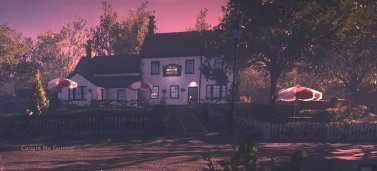
Not somewhere exactly real. Worse. Somewhere nearly real. A Shropshire of the corner of the eye. The road you do not take. The village you see on a sign and never visit. The lane that looks ordinary until the light changes and suddenly it seems to belong to an older, colder version of England.
Everybodys Gone to the Rapture makes that version visible.
The game does not begin with the end. It begins after the end has finished being dramatic. Whatever took everyone has already passed through. You are not there for the panic. You are not there for the final decision. You are not there to rescue a child, stop a machine, close a portal, find a cure, or perform any of the usual nonsense that makes us feel important in disaster stories.
You arrive late. Not heroically late. Pathetically late.
The kind of late where the kettle is still warm and the person you came to see no longer exists. So you walk. Reviewers moaned about the walking, because people moan when a game refuses to give them a weapon and a sprint button. But the slowness is the punishment. The game makes you take the valley at the pace of dread. Not terror. Terror runs. Dread walks because it knows there is nowhere useful to go. You cross the spaces between houses, between voices, between fragments, between lives. Every road has time to become suspect. Every field has time to become too quiet.
The silence is not empty either. That is the horrible part. Yaughton is full of what is missing.
The voices come first as haunted fragments and pieces. Little bits of human life caught in the light. An argument. A fear. A confession. A kindness. A lie. A prayer. A scientific observation made useless by scale. You follow them the way someone might follow smoke, except the smoke keeps speaking in the voices of the vanished.
They are like stone tape theory puzzle pieces to a cosmic horror jigsaw, but there is no picture on the box.
You keep collecting them. Kate. Stephen. Wendy. Jeremy. Frank. Lizzie. The village. The observatory. The Pattern. The quarantine. The phone calls. The fear. The light. Each fragment seems to promise shape. You think, briefly, that enough pieces will give you the final image. That is the old detective instinct. Gather enough scraps and the world becomes legible.
But the final image is impossible to see.
Not hidden. Impossible.
That is the difference. The Pattern is too large, too strange, too indifferent to fit into the village story, yet the only way we meet it is through village story. Through marriage, religion, gossip, guilt, science, panic, illness, duty, suspicion. The cosmic event does not arrive in a clean beam from above and introduce itself politely. It gets tangled in human mess. It comes through landlines and observatory equipment, through sick rooms and church talk, through Stephens fear and Kates loneliness, through everyone trying to understand the impossible using whatever old tools they have lying around.
God. Disease. Government. Punishment. Secrets. Outsiders. Bad luck. Someone elses fault, obviously. Very important in a village. Even the apocalypse probably has a culprit if you ask the right person loudly enough.
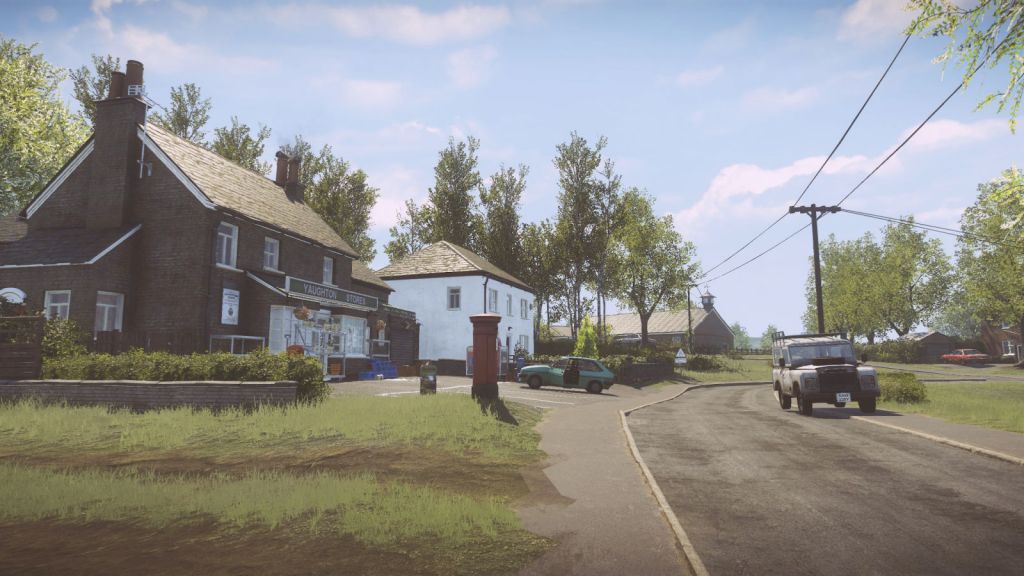
That is one of the bleak jokes of the game. The end of the world happens, and people remain local. They do not instantly become noble because something vast has brushed against them. They stay complicated, frightened, decent, selfish, tender, petty, faithful, unfaithful, wounded and wrong. Cosmic horror usually makes humanity seem tiny by showing us gods, monsters, voids, dead stars, things with too many eyes and not enough respect for architecture.
Everybodys Gone to the Rapture makes humanity tiny by leaving a village exactly as it was one minute after every human being has been taken. No monster could improve on that. Kate and Stephen sit at the heart of the wound, and the game is better because neither of them can be reduced cleanly. Stephen is local, brilliant, compromised, frightened, still acting like the valley can be managed if only the right decision is made quickly enough. There is something very British in his doomed faith in containment. Somewhere underneath him is the idea that reality might obey a cordon, a phone call, an instruction, a chain of responsibility. The impossible arrives, and he tries to put a fence around it.
Kate is different. She is closer to the Pattern, or perhaps only more willing to admit that closeness. She is the outsider, the scientist, the woman listening to something nobody else can bear to hear properly. Her intelligence does not save her from loneliness. If anything, it gives loneliness a larger room to echo in. She understands more, belongs less, and moves towards the thing at the centre with a mixture of terror, grief and recognition.
Their marriage matters because it brings the cosmic down to the kitchen table. The end of all human life is not treated as separate from jealousy, resentment, old desire, failed communication, the awful little injuries that people carry into rooms and leave there. Something inhuman enters the valley, but it does not erase the human immediately. It illuminates it. Badly. Mercilessly.
A marriage becomes part of an extinction event.
That should sound absurd. It does not. It sounds about right. If the world ended tomorrow, most of us would still have unread messages, unresolved resentments, washing in the machine, someone we should have called, someone we wished had called us, and a small private list of things we were absolutely going to sort out eventually. Eventually is the first thing the apocalypse kills.
Nobody in Yaughton gets eventually.
No one gets to go back to the pint.
No one gets to shut the car door.
No one gets to finish the cigarette or regret having started it.
No one gets to apologise.
No one gets to become kinder next year.
No one gets the next version of themselves.
The future has been cancelled, but the present is still running. That is the hauntological core of the game. It is not nostalgia because there are landlines and radios and a rural 1980s atmosphere. It is not a period mood piece with a glowing infection problem. The haunting comes from time itself snagging its cardigan on the door latch.
Yaughton like all towns and villages is full of lityle futures that were supposed to arrive and never did. Tiny futures. Domestic futures. The next drink. The next shift. The next argument. The next Sunday service. The next reconciliation. The next walk home. The next morning when things might be a tiny bit less bad.
All gone.
The structures remain. The village remains. The roads remain. The machinery of ordinary life remains. But the lives those structures were built to hold have been removed from the schedule.
There is something especially grim about that in rural England. Villages can already feel like places where the past has not ended properly. Old houses. War memorials. Churchyards. Noticeboards. Faded signs. Fields that were fields before anyone currently alive had a name. The past sits close to the surface, and the future often arrives late, if at all, looking slightly apologetic. In Everybody’s Gone to the Rapture, that feeling curdles. The old world does not become quaint. It becomes a trap. A dead broadcast still transmitting parish life after the parish has vanished.
You can almost hear the voice.
Remain indoors.
Await instruction.
Do not panic.
There are no further instructions.
That public information chill runs under the whole thing. The game has that British nightmare of calm authority facing something it cannot comprehend. Not American disaster panic. Not soldiers shouting in corridors. Something quieter and worse. A sense of clipped voices, procedures, official concern, local obedience, then the slow sick knowledge that none of it matters. Catastrophe is being approached with the emotional toolkit of a committee meeting.
Somewhere, a clipboard has died bravely in the hope of keeping order.
The voices in the game deepen that dread because they are never enough. Each one adds detail, but also distance. You learn more and feel less certain. The jigsaw grows, but the shape becomes less human. At first you think you are reconstructing events. Later it feels more as if the events are reconstructing you, teaching you how little of reality can be gathered from human fragments.
Cosmic horror often depends on a forbidden image. A thing seen that should not be seen. Here, the final image never arrives, which is more disturbing. The voices are pieces, but the completed picture belongs to something outside human vision. You can place Kate beside Stephen, Stephen beside the quarantine, the quarantine beside the village, the village beside the light, the light beside the Pattern, and still the centre refuses to resolve.
The lid of the jigsaw box is blank. Or worse, the picture on the lid is a Shropshire village in the afternoon sun.
That is the part that feels properly dark. The impossible final image may not look monstrous at all. It may look like the world continuing exactly the same way without us. A lane. A field. A pub. A car door open. Smoke curling from a cigarette. The pint still cold. An empty chair. A warm engine. Ordinary things, each one made obscene because the person attached to it has been edited out. The games light is beautiful, which makes it harder to trust. Horror that looks foul is almost honest. Rot tells you where it stands. Teeth are rarely ambiguous. But the Pattern glows. It sings.
Jessica Currys score makes the valley feel lifted, almost sanctified. The music opens a door towards awe, then the human fragments keep reminding you what awe costs when bodies are involved.
The rapture might be salvation.
It might be infection.
It might be contact.
It might be annihilation wearing choir robes.
It might be something for which all those words are childish little cups held under a waterfall.
The title keeps shifting. Everybody’s Gone to the Rapture. It sounds like a religious claim, but also like village gossip overheard through a wall. It sounds profound and faintly ridiculous at the same time. That suits the game. It has one foot in revelation and one foot in damp English awkwardness. Eternity has arrived, and someone is probably worried about who has the keys to the hall.
That mixture is not bathos. It is the horror. The cosmic does not replace the local. The cosmic possesses it. The vast moves through the small. The unknowable enters the valley and has to pass through marriages, bedrooms, farms, pubs, churches, roads, bad phone calls, stale resentments, love that arrived too late or in the wrong shape.
Yaughton becomes haunted before it has even had time to become dead.
The glowing figures are not comforting ghosts. They do not return to guide you. They do not know you. They are not performing closure. They are recordings made by a place under impossible pressure. The valley keeps people in the least flattering way possible: as moments. Not life stories. Not completed selves. Moments. A person reduced to the angle at which the end caught them.
There is a cruelty in that.
We all like the idea that memory will be kind, or at least editorial. That someone will arrange us after death into something with a point. The game refuses that. You are not remembered as a clean moral. You are remembered as residue. A phrase. A failure. A small courage. A bad decision. A voice in the lane after the body is gone.
The valley does not care about your preferred version.
It keeps what it keeps.
That feels much closer to how places actually remember. Not as stories, but as stains. The pub remembers who sat where. A road remembers routine through wear. A house remembers arguments in the arrangement of rooms. A village remembers people through habits long after anyone can explain them. Yaughtons haunting is an exaggeration of something ordinary. Places are always keeping pieces of us. The game simply turns up the volume until the pieces begin speaking.
Cycling through Shropshire after playing it, or even just thinking about it, becomes slightly infected by that idea. A quiet lane is no longer simply quiet. It has the wrong potential. A village with nobody visible is no longer only sleepy. It has the possibility of one minute after. The ordinary starts to feel like a disguise that apocalypse could wear without altering a stitch.
A car on the verge.
A road bending out of sight.
A house with no movement inside. A pub before opening time. The mind fills in life automatically because it needs to. People must be nearby. Someone must be home. Someone owns that car. Someone will come out in a minute. Someone is making tea. Someone is swearing at a stuck drawer. Someone is alive behind the walls.
But what if there is no someone?
What if the world has kept the arrangement and removed the occupant?
The bicycle makes that thought worse because you cannot hide from the road. In a car, absence slides past the window. On a bike, absence has time to walk beside you. You feel each stretch. You hear how little is happening. If no one came the other way for ten minutes, you would know it. If the village ahead was wrong, you might know it before you understood why.
A pub with the television still on.
A cigarette still burning.
A half pint still cold. A car idling with the door open. No one around. One minute after everyone has gone.
That is not abandonment.
That is the world caught in the act of losing us.
And the worst part is that Shropshire would still look beautiful. Of course it would. The fields would not blacken out of mourning. The hedges would not bow their heads. The hill would still be a bastard for anyone who wanted to cycle it. The road would still curve as if it had somewhere important to be. The sky might even be lovely, because the sky has always found a way to look magnificent.
Beauty without people is often sold to us as peace. In the game it feels like indifference .The world remains. That is the insult.
We are always imagining the world ending with us because we are arrogant animals with central heating and smart phones. But Everybodys Gone to the Rapture suggests the planet may not match our drama. It may simply continue. Roads waiting for feet. Fields waiting for seasons. Buildings waiting for occupants who have become light. The apocalypse may not be the collapse of the world. It may be the discovery that the world was never as dependent on us as we hoped.
The only mercy is that Yaughton does not forget completely. The fragments remain. But what kind of mercy is that? A voice without a body. A regret without a future. Love without the day after. Faith without the believer. Science without the scientist. A village without villagers, still murmuring with the last pieces of them. It is preservation as horror. An archive made from interruption. A cosmic jigsaw of human remains, not flesh but moments, none of them enough, all of them pointing towards an image that cannot be seen from inside a human skull.
The player becomes a late witness to a witness. The valley has seen something. The people have felt something. The light has taken something. You follow the recorded scraps, but the actual event remains beyond you, just as it remained beyond them. Even Kate, closest to the Pattern, seems to move into understanding at the cost of remaining recognisably reachable. To understand the thing may be to leave the scale at which human life makes sense.
That is cosmic horror at its bleakest, not because it shows tentacles over a church roof, though Oswestry could probably make that work, but because it reveals human meaning as local, fragile, temporary, and still unbearably precious.
The Pattern makez everyones existence redundent, yet the fragments matter. The universe is too large, yet a half pint matters. A marriage matters. A fear matters. A voice in a lane matters. The tiny does not defeat the cosmic, but it stains it. It elevates the game from being merely bleak. It is horrific because people are gone. It is poignant because the people were never abstractions. They were messy, partial, difficult, scared, loving, and unfinished. Their smallness is not a weakness in the story. It is the whole ache of it.
Everyone has gone to the rapture, perhaps.
But the rapture has left the dirty glasses.
The final image never arrives. Only fragments. Pieces of a puzzle too large for comprehension. Voices trying to form a shape inside a valley that no longer has ears. Shropshire lit by something that may be God, disease, signal, memory, or the last bad dream of a species that thought the world would stop when it did.
The cigarette is still burning. The pint is still cold. The car is still running. And one minute ago, every human being was still here.


Leave a Reply