A hotel never meets one person.
It meets one person at reception, another at the bar, another at dinner, another after midnight, another at breakfast, another in the room after they have gone. The same guest becomes a dozen different people depending on who sees them, what hour it is, how much they have drunk, whether they have argued, whether they have slept, whether they are lonely, whether they are grieving, whether they are trying to impress someone, whether they are trying not to cry, or whether they have simply discovered that the room only has two tiny milks and civilisation has finally collapsed.
That is the real ghost of a hotel.
Not a pale woman at the end of a corridor. Not some tragic figure on the staircase. Not the usual heritage ghost story where every draught becomes a murdered maid with unfinished business and every creaking floorboard is expected to carry the emotional weight of 1896. The true hotel ghost is usually alive, breathing, checked in, walking around with a key card and asking what time breakfast finishes.
But they are already scattered.
Reception has one version.
Bar has another.
Restaurant has another.
Kitchen has another.
Housekeeping has another.
Maintenance has another.
Breakfast has another.
No one has the whole person.
The hotel has the haunting.
This is what hotel work teaches you quickly, provided you are cursed with noticing things. Identity is not a single object. It is not a polished statue sitting inside someone, waiting to be discovered by deep conversation and flattering lighting. Identity is more like a broken mirror. Every member of staff catches one piece from one angle, and the angle depends on mood, hunger, drink, tiredness, grief, ego, need, shame, lust, irritation, context and time of day.
The booking system pretends otherwise.
The booking system is an optimist, poor thing. It thinks one guest is one guest. One name. One room. One rate. One arrival date. One departure date. One clean little entry in the grand ledger of temporary human containment. The computer says Mr Harris, room 101, two nights, breakfast included, card on file.
Lies.
Not evil lies. Worse than that. Administrative lies.
The hotel does not meet Mr Harris. It meets fragments of Mr Harris. It meets Mr Harris as surname, smile, pint, ticket, noise, tip, bathroom, cigarette, breakfast face and departure. The official system stores the booking. The staff store the person badly, partially, unfairly, sharply, comically, sometimes tenderly, and sometimes with the quiet hatred reserved for people who leave cigarette ends in flower beds.
This is how a hotel builds a human being.
Not from truth. Truth is too large. Too private. Too spread across childhood, debt, romance, shame, memory, digestion and whatever happened on the road before check in. A hotel builds a person from contact.
A waitress remembers him as the man who tipped well.
That is her version. He was polite at the table, called her love but not in the nasty way, asked how her night was going and seemed to mean it. He had the easy confidence of someone used to being liked, or at least gently obeyed. He made a joke about the wine without turning it into a lecture. He thanked her when she brought the food. He did not click his fingers. Never underestimate how low the bar can be and how many men still bring a shovel.
At the end of the meal, he left a note folded under the card receipt and a tip large enough to make the table feel briefly redeemed. To her, he is not a problem. He is one of the good ones. A bit loud, maybe. A bit pleased with himself. But generous. And in hospitality, generosity can arrive with a halo, especially near closing time, when everyone’s feet have become separate legal entities.
The bartender knows a different man.
By 11.30pm, the same guest is a loud mouthed dickhead.
Not evil. Not dangerous. Worse in some ways. Tedious. Over inflated. Full of the tragic late night belief that every opinion improves with volume. He leans on the bar as though he has shares in it. He says mate too often. He tells a story that may once have been funny, possibly in 2009, possibly to people trapped in a minibus. He laughs before the punchline and after it, just to make sure the room understands where the enjoyment should be placed.
The bartender smiles because smiling is cheaper than confrontation and because the man is still spending money.
To the waitress, he was warm.
To the bartender, he is work with teeth.
The chef knows him as something else entirely.
Table 22. Garlic allergy, but a little bit of garlic is okay.
In the kitchen, his identity has been stripped of jacket, smile, charm, aftershave, voice, laugh, marital status, income, childhood, politics and every flattering thing he has ever believed about himself. He is now a contradiction printed on paper. Garlic allergy, but a little bit of garlic is okay. The chef looks at the ticket and feels, for one pure second, already questioning why he woke up that day when up until now, it was going beautifully as planned.
Is it an allergy?
Is it a preference?
Is it medical?
Is it theatre?
Has garlic become a philosophical position? Are allergies simply a concept?
Somewhere in the dining room, a man is deciding how much garlic his immune system can negotiate with. Somewhere in the kitchen, a chef is trying not to say the word cunt.
To the chef, he is not generous.
He is not handsome.
He is not charming.
He is table 22, and table 22 has made garlic legally unstable.
The receptionist has another version.
She is newly divorced, and she remembers him as handsome.
Not film star handsome. Not unreal handsome. Better than that, perhaps. He arrived impeccably dressed. Shoes clean. Coat sitting properly on the shoulders. Shirt sharp. Hair behaving. An undeniable smile. The kind of smile that makes a tired reception desk feel, for three seconds, like the lobby of an older, better life.
He said his name clearly. He held eye contact. He made some ordinary remark about the building that landed with more charm than it deserved. He looked like someone who had somewhere to be and had chosen not to rush. That matters. Anyone can be attractive in a photograph. It takes a different thing to be attractive while giving a car registration to a woman behind a desk who has already dealt with three key cards, a late checkout request and a man who thinks booking dot com is a sovereign nation.
She does not know about the bartender’s version yet.
She does not know about table 22 and the garlic crisis.
She does not know about the toilet.
Why would she?
Her version is arrival. The clean frame. The edited self. The man before the building has started removing pieces. He exists to her as posture, fabric, smile and possibility. That is not shallow. That is how moments work. People arrive in fragments, and sometimes a fragment catches the light.
The housekeeper has no interest in the smile.
The housekeeper cannot figure out why it is so difficult to flush a toilet.
This is her version. Not the handsome arrival. Not the generous diner. Not the bar bore. Not the garlic incident in human form. The housekeeper meets the guest after romance, appetite, charm and alcohol have left the room and the body has filed its report. The room is no longer an image. It is evidence.
Towels abandoned in strange places. Bin full. Bed abused rather than slept in. One glass on the windowsill. One sock hiding with intent. Bathroom in a condition that raises questions about education, plumbing and the future of the species.
The housekeeper does not hate him.
Hate would take too much energy.
She simply adds him to the private category of men who appear able to operate a car, a phone, a debit card and possibly a business, but not a flush. It is a large category. It has international branches.
Then the maintenance man sees him outside.
The maintenance man has been watering the hanging baskets. Properly watering them too, not just waving a hose in their direction like a bored priest. He has kept them alive through heat, wind, neglect, drunk guests and the general British suspicion that plants should manage themselves. He has fed them, trimmed them, turned them, noticed which basket catches too much sun and which one sulks near the wall.
Then the guest flicks a cigarette butt into one.
Instant hatred.
Not dramatic hatred. Not operatic hatred. Maintenance hatred, which is older and more durable. The kind formed when someone damages a thing you have quietly kept alive. The cigarette butt drops into the fresh compost like a tiny act of class war. The guest does not even look. Of course he does not look. People who flick cigarette butts into hanging baskets rarely pause to consider the emotional life of the man who watered them.
Now the maintenance man has his version.
A well dressed prick with good shoes and the manners of a blocked drain.
So who is the man?
The waitress has a generous guest.
The bartender has a loud mouthed dickhead.
The chef has table 22 with a garlic allergy but a little bit of garlic is okay.
The newly divorced receptionist has a handsome man with an undeniable smile.
The housekeeper has the toilet.
The maintenance man has the cigarette butt in the hanging baskets.
None of them are wrong.
That is the horror.
The man is not hiding behind these versions. The man is these versions, depending on where he stands, what he wants, who is watching, how much he has drunk, what mood he is in, what power he thinks he has, what hour of the day it is, and which member of staff has been unlucky enough to receive that particular cut of him.
A hotel does not reveal identity by finding the secret person underneath.
It reveals identity by showing how many people one person can become.
This is where hotels become properly eerie. Not because they are full of ghosts, but because they manufacture ghostliness out of living people. A ghost is an incomplete presence. A trace. A partial sighting. A thing known by its effects. In that sense, every guest becomes ghostly almost immediately. Not after death. After service.
A laugh remembered by bar.
A tone remembered by reception.
An order remembered by kitchen.
A silence remembered by restaurant.
A room remembered by housekeeping.
A cigarette butt remembered by maintenance.
The guest is still alive, still checked in, still asking for more milk, but already existing as a scattered afterimage.
This is not gossip, though gossip is obviously the crude petrol that keeps many hotels running after 9pm. Gossip wants the full story because gossip is greedy. Gossip wants motive, scandal, names, history, an ending, ideally something involving someone else’s bad decisions and a sentence that begins with “you did not hear this from me,” which is always the most reliable sign that the following material is entering general circulation.
Hotel memory is stranger than gossip.
It is not complete enough to be gossip.
It is not official enough to be evidence.
It is not kind enough to be nostalgia.
It is a collage of contact.
Each member of staff holds a shard, and the shard is shaped by the work they were doing when the guest passed through them. The waitress remembers the tip because the tip altered the feeling of the table. The bartender remembers the mouth because he had to stand in front of it at 11.30pm. The chef remembers the allergy because it threatened the logic of the section. The receptionist remembers the smile because arrival is a stage and she was, perhaps, privately ready to notice charm. The housekeeper remembers the toilet because the body tells truths the mouth would never sign for. The maintenance man remembers the cigarette because disrespect has a way of landing exactly where effort has been placed.
The guest thinks he stayed in a hotel.
The hotel has quietly made six men out of him.
Somewhere between those six men is the real ghost.
Not the whole man. Never the whole man. The whole man is unavailable, perhaps even to himself. What remains in the hotel is the assembled thing, the collage made by staff who each received him under different conditions. He is remembered as tip, noise, ticket, smile, toilet, cigarette. A human being reduced to six fragments, which is cruel, funny, unfair, and probably more honest than any version he would give of himself.
This is how hotels remember people.
Not as biographies.
As traces with room numbers.
The same thing happens with quieter guests, sadder guests, stranger guests, better guests. The loud ones are simply easier to hear.
Room 101 contains a man who has spent the day in the bar with business partners. At reception he was fine. Brisk, maybe. The sort of man who says brilliant to mean acceptable. At the bar he became bigger. He laughed harder, spoke louder, bought rounds, called people mate with the generous authority of a man trying not to notice the silence waiting upstairs.
Later, alone in his room, he watches football at an unspeakable volume.
This is not sport anymore. This is architecture. This is a wall built out of crowd noise. The television fills the room so silence cannot get in. Downstairs he had witnesses. Upstairs he has volume. By morning, housekeeping may find the curtains still closed, glasses by the bed, the room smelling faintly of beer, sleep and a man avoiding his own thoughts with admirable commitment.
Who is he?
The polite arrival?
The bar performer?
The football noise?
The bad sleeper?
The breakfast survivor?
All of them.
None of them completely.
The hotel does not reveal a secret version of him. It reveals that identity is situational. He becomes different depending on whether he is being welcomed, watched, fed, drunk, alone, tired, or forced to face daylight with a head full of lager and regret.
Hotels understand this better than philosophy departments because hotels do not have the luxury of pretending people are consistent.
Room 214 contains a couple arguing.
They may have arrived smiling. Couples often do. Smiling is one of the cheapest ways of getting old trouble past reception. They might have checked in neatly, made some small joke about the journey, asked about dinner, looked for all the world like a functioning pair of adults who had not spent the last forty minutes in a car weaponising the word fine.
The room receives them.
The door closes.
The argument wakes up.
Hotels are dangerous for couples because they remove the domestic camouflage. At home, resentment can hide in laundry, pets, television, work emails, cupboards, errands, children, the noble little distractions that stop people saying what they mean. In a hotel room there is nowhere for the old argument to go. Just two people, a bed too central to ignore, a kettle that does not deserve this, and walls doing their best.
Later they come down to dinner.
Now the restaurant sees them as public ruins.
They sit too carefully. They look at the menu as if the menu has caused the problem. They become very polite when the waiter arrives because the waiter is a temporary ceasefire with shoes. A good waiter does not need the details. The details are often just scenery. The truth is in the angle of the chairs, the over bright thank you, the pause before answering, the way one person asks what the other is having while clearly hoping the other might vanish into the soup.
The kitchen receives none of this.
The kitchen receives table seven.
Two starters. One steak. One fish. No sauce. Chips instead of potatoes.
A relationship becomes a ticket.
This is funny because it is brutal, and brutal because it is true. Hospitality constantly translates messy human life into practical units. Grief becomes room service. Lust becomes a noise complaint. A birthday becomes a pre order. Loneliness becomes a table for one. A collapsing marriage becomes two mains and a bottle of wine.
The staff do not own the full story.
They hold the pieces required to serve it.
Room 207 contains someone crying.
The hotel may never know why. It probably should not. Not every closed door owes the building a confession. But fragments arrive anyway.
Reception may remember a quiet check in. Not rude. Not dramatic. Just absent, as though the body had arrived slightly before the person. Kitchen may receive an order for something plain and comforting, food chosen not from pleasure but from the body’s irritating insistence on continuing. The tray may come back barely touched. Housekeeping may find tissues in the bin, curtains still drawn, the bed used less for sleep than for surviving time. Breakfast may see the guest reassembled, polite, washed, careful, asking for toast as if toast is proof of normal life.
That identity is not known.
It is inferred.
Quiet arrival. Untouched tray. Drawn curtains. Tissues. Breakfast face.
A person becomes a constellation.
The staff see separate stars.
The hotel supplies the darkness between them.
Room 111 contains an old woman playing Classic FM while watching the bowls players on the lawn.
This image is dangerous because it invites sentimentality. The elderly guest by the window, music playing, bowls on the grass, afternoon light behaving itself for once. Very easy to make it sweet. Too easy. Sentimentality is what happens when imagination gets lazy and puts a blanket over someone.
She is not an ornament.
She is a person.
That means she has irritations, preferences, memory, judgement, private jokes, boredom, rituals, perhaps grief, perhaps not, and almost certainly strong views on the correct strength of tea. To reception she may be the woman who likes the same room. To housekeeping she is the guest who wants extra milk. To breakfast she is regular timing. To the restaurant she is the window table. To staff collectively, she becomes continuity.
Some guests are chaotic ghosts.
Others are ritual ghosts.
The old woman’s ghost is made of repetition. Classic FM. Bowls. The chair. The lawn. The same small ordering of the day. Hotels are temporary places, but for some people they become a way to revisit themselves. Same room, if possible. Same table. Same view. Same habits. This is often dismissed as fussiness by people who lack imagination. Sometimes fussiness is just memory defending its last good furniture.
Staff understand repeated preference because staff maintain it.
They remember without making a ceremony of remembering. That is one of the quiet arts of hospitality. More milk. Window table. Not too near the door. Tea before food. No fuss. The guest may think they are being difficult. Or they may think the world should naturally bend around them. Staff learn the difference. The old woman in room 111 may be sweet, difficult, funny, lonely, perfectly content, or all of these within one hour. The building gets the fragments. The staff hold the pattern.
Room 301 contains the couple having the loudest sex anyone has ever heard at 2.30pm.
This too is part of the serious argument, though it arrives wearing a clown nose and probably very little else.
Hotels are partly built for sleep, partly for food, partly for work, partly for escape, and very much partly for the ancient human belief that a door with a number on it suspends consequence. People behave in hotel rooms as though checkout includes a memory wipe for the entire building. They forget walls. They forget corridors. They forget housekeepers. They forget that the person who serves them dinner may have recently walked past their room while they attempted to communicate passion through load bearing furniture.
The couple in 301 are not merely comic relief.
They are proof of simultaneity.
In one room, someone is crying. In another, someone is watching bowls. In another, a couple are arguing. In another, football is being used as a barricade against silence. In another, two people are conducting what sounds less like intimacy and more like a wardrobe being exorcised. Downstairs, someone wants to know if the soup is gluten free. A wedding guest cannot find the toilets. A businessman is trying to split a bill in a way that suggests capitalism has finally eaten his soul. The printer in the kitchen is making its little death chirp. Someone has asked for extra gravy at the exact moment the section has run out of patience as a concept.
This is the hotel.
Not a story.
A stack of incompatible realities held together by carpet, plumbing, payroll and politeness.
Guests experience their stay as a line. Arrival, room, drink, dinner, sleep, breakfast, checkout. Staff experience it as a map. All the rooms at once. All the moods at once. Grief above lust, boredom beside celebration, hunger below argument, football beside silence, routine beside collapse. The building holds these contradictions without comment because buildings have better manners than people.
The staff carry them.
And staff are not just witnesses. They are participants in the way identity gets made. A guest becomes one person to a waitress because she receives his charm and tip. He becomes another person to a chef because the chef receives the absurdity of his order. He becomes another to a housekeeper because the room shows what manners failed to carry upstairs.
But the staff also become different people in response.
A good restaurant manager understands this better than anyone.
Not intellectually, necessarily. He may never sit in a darkened room stroking his chin and muttering about fragmented identity, because he has tables to run and table twelve is already laughing at a volume that suggests trouble is putting on its shoes. But in practice, he knows. He reads people as versions.
At one table, he is wing man.
There is a nervous man on a date, trying to appear relaxed with the haunted stiffness of a deer learning the saxophone. The manager gives him just enough familiarity to lift him. A joke. A recommendation. A bit of warmth that makes him look known, but not exposed. He helps the evening without making it obvious that help was needed. He gives the man half a point of charm and leaves before the spell becomes staff shaped.
At another table, everything changes.
A family has come in after a mother has died. Or perhaps the mother died recently, and this is the first meal that has forced them back into the public world. Grief in restaurants is very particular. It does not always look like grief. Sometimes it looks like bad posture. Sometimes like too much politeness. Sometimes like someone reading the menu three times and understanding none of it. Sometimes like laughter arriving too loudly because sorrow has no correct table manners.
The manager lowers his voice. Not theatrically. Theatre would be vulgar. He becomes slower, quieter, less shiny. He does not perform compassion at them. Performed compassion is just vanity in black. He offers time. He removes pressure. He makes the room feel softer without making them feel watched. He understands that grief does not want a speech. It wants not to have to explain itself while ordering soup.
Then the room turns again.
The lads on the twenty first birthday are filling their corner with bright male electricity. They are not bad lads, necessarily. They are simply young, loud, hopeful, hungry for attention, and convinced the evening was invented for them personally, which in fairness it partly was. That kind of table can become brilliant or unbearable depending on who conducts it. The manager arrives with energy. He hypes the birthday. He gives them theatre. He makes the birthday boy feel crowned. But he also places invisible rails around the night. He laughs with them in a way that says yes, enjoy yourselves, and no, you are not annexing the whole building.
He has become three different men in ten minutes.
None of them false.
This is the part people outside hospitality often miss. Good service is not one personality spread evenly over a room like cheap margarine. It is precision. It is alteration. It is knowing that one table needs wit, one needs hush, one needs authority, one needs pace, one needs the kind of bright discipline usually reserved for children holding scissors. The best staff change shape without losing sincerity. They do not act because they are fake. They act because reality requires different tools.
A good restaurant manager is a personality tailor.
He cuts himself differently for each table.
This mirrors the guest’s fragmentation. The guest becomes many selves across the building. Good staff become many selves in response. Hospitality is not simply the guest being served by workers. It is a field of adjustments. The person at the table gives off pressure, and the staff alter the room around it. Some guests need to be expanded. Some contained. Some calmed. Some left alone. Some gently rescued from their own evening. Some stopped before their joy becomes furniture damage.
The best service is often invisible because everyone leaves believing their version of events was natural.
The nervous date thinks he found his confidence.
The grieving family thinks the room happened to be gentle.
The birthday lads think they created the atmosphere.
The difficult guest thinks he chose to be reasonable.
The lonely diner thinks breakfast was simply kind.
The manager knows the edits.
The hotel survives on these edits.
That is why identity in a hotel is not simply observed. It is pieced together, altered, protected, misread, corrected, flattened, inflated and handed from one department to another.
The official identity is often the least useful one. Name, room, booking, title, company, card. These are labels. The working identity is mood plus context. A tired guest at check in. A lonely man at the bar. A grieving daughter at dinner. A couple pretending not to argue. A birthday table rising. A regular preserving ritual. A hungover guest at breakfast, spiritually held together by toast.
Hotel work teaches identity as practical weather.
You do not ask what someone is.
You ask what version has arrived.
This is why staff memory becomes strange. It does not store people as full portraits. It stores them as linked fragments. Room number plus mood. Object plus tone. Order plus expression. Sound plus aftermath. The guest becomes something like a song made from samples. A bit of voice here. A bit of rhythm there. Crackle. Silence. Repetition. An old phrase returned in a new context.
Identity becomes collage.
Not because staff reduce people deliberately, but because the building reveals people partially. Nobody in a hotel is seen from the front for long. They are seen in passage. Through need. Through appetite. Through mess. Through complaint. Through kindness. Through what they ask for. Through what they leave.
A hotel is a place where people accidentally annotate themselves.
The most honest guest may not be the one telling you their life story at the bar. It might be the one who quietly thanks housekeeping. Or the one who apologises to the waiter before asking for water. Or the one who turns savage over a key card. Or the one who leaves the room immaculate because they cannot bear to be a burden. Or the one who performs charm downstairs and leaves destruction upstairs. Identity is not only what people say. It is what their behaviour costs other people.
That is the sharp edge of hotel work.
You see how people distribute respect.
A guest can be charming to a manager and cruel to a housekeeper. Generous at the bar and mean at breakfast. Funny with other guests and dismissive to the waiter. Polite at reception and monstrous when the chips are late. This is not contradiction. This is identity revealed by hierarchy. People often show their real ethics not to those they admire, but to those they think they can inconvenience without consequence.
Hotels are very good at that particular X ray.
Not because staff are morally superior. They are not. Staff are tired, petty, kind, sharp, bored, generous, irritated, funny, overworked, and occasionally sustained entirely by caffeine and private judgement. Saints would not last a Saturday night. But staff see people under pressure because service creates pressure. Waiting creates pressure. Hunger creates pressure. Rooms create privacy, and privacy creates leakage. The hotel does not invent character. It removes enough cover to let pieces fall out.
The pieces matter.
A whole identity is too large to serve. A fragment can be responded to.
That is why good hospitality is built around reading fragments correctly. Not solving people. Not invading them. Not turning service into amateur therapy. Just noticing the piece in front of you. This man needs grounding. This table needs space. This guest needs speed. This couple needs careful distance. This birthday needs fuel and fencing. This person alone needs warmth without pity. This complaint needs firmness without humiliation. This regular needs continuity. This room needs extra milk.
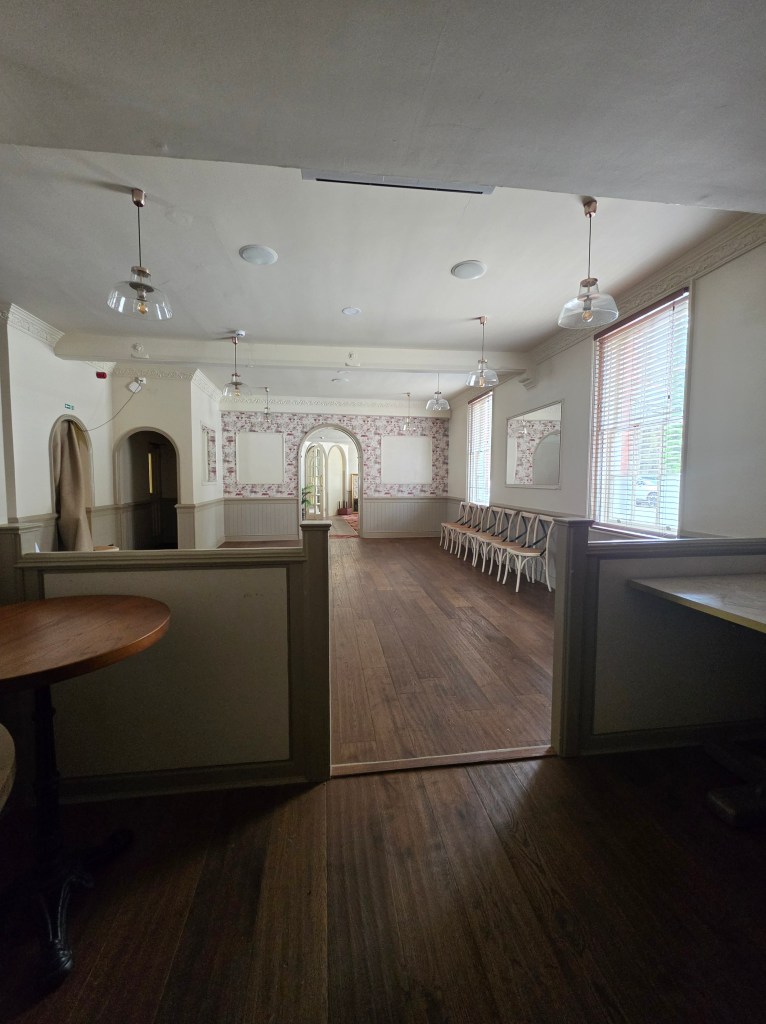
The old restaurant, now used as a conference room, matters because it used to be one of the places where those fragments gathered.
It was not only a room where people ate. It was a room where private versions came down from bedrooms and became briefly public under light.
The man from room 101 brought his bar self and tried to make it dine.
The couple from room 214 brought their argument disguised as menu discussion.
The person from room 207 brought grief dressed as politeness.
The old woman from room 111 brought ritual.
The couple from room 301 brought, one hopes, an appetite and at least a little shame.
The dining room assembled them for a while. Not completely. Never completely. But enough for staff to read the edges.
Now the room has become a conference room. Chairs against the wall. Daylight through blinds. A space ready for meetings, functions, training days, weak pens, water jugs and someone saying moving forward with the calm authority of a man who has never had to carry three plates past a table actively ending a relationship.
The room is useful now in a different way.
But it has not become blank.
Rooms remember use through posture. The lights still seem to expect glassware. The floor still seems to expect tables. The route from kitchen to room still feels like service even when nobody is eating. The mirrors still double the absence. The chairs along the wall look less like furniture and more like witnesses who have agreed not to speak unless absolutely necessary.
This is not nostalgia. Nostalgia would say the old restaurant was better. Maybe it was not. Maybe it had bad nights, bad soup, bored guests, overcooked vegetables, miserable staff, and men who believed asking for the manager counted as having depth. The past does not deserve a free halo simply because it has left the room.
The point is not that the old restaurant was better.
The point is that it was specific.
It had a job that made identities visible. It received people at the point where appetite, class, mood, manners and private trouble met. A restaurant is a place where people tell on themselves while trying not to. How they order. How they wait. How they speak to the person serving them. How they complain. How they thank. How they eat when they are sad. How they behave when they are paying. How they perform generosity. How they perform taste.
The old restaurant was a machine for catching fragments.
The conference room catches fragments too, but colder ones. The meeting self. The bored self. The managerial self. The resentful self. The person who says absolutely while understanding nothing. The person who takes notes to look alive. The person who eats all the biscuits while pretending not to. The person who says they will circle back, which is business language for abandoning something in a field.
The room still gathers versions of people.
But the old restaurant gathered them closer to appetite.
That is why it feels haunted. Not haunted by one ghost. Haunted by the method of piecing people together. Haunted by all the staff versions of all the guest versions. Haunted by the fact that no one ever saw the whole person, yet everyone saw enough to create something.
A hotel ghost is not a transparent figure at the end of a corridor.
It is a person remembered in pieces by people who served different versions of them.
It has no single location because it is spread across labour.
The assembled guest may be more revealing than the guest’s own idea of himself.
Identity is not only what you mean.
It is the effect your presense has on who you are interacting with.
That is the sentence hotels write over and over again.
The hotel knows better.
Or rather, the hotel does not know at all.
The staff know in pieces.
And pieces are often how people survive in memory. We rarely remember anyone whole. We remember a gesture, a smell, a laugh, a table, a phrase, a song, a room, a particular way they said fine when nothing was fine. The hotel makes this obvious because it turns every guest into a sequence of practical encounters. A name. A drink. A plate. A towel. A sound. A bill. A goodbye.
The official system forgets quickly.
It has to.
Checkout. Strip bed. Wash plates. Reset table. Clear bin. Kill key card. Take payment. Smile at the next arrival. The next guest needs the illusion that nothing has happened before them. Hospitality is organised amnesia.
These are not complete people.
They are fragments of people.
But fragments are the hotel’s language. A memory of someone that leaves when they get in the taxi.
A building full of people being broken into angles and remembered by strangers who only met one side.
Every room has a version.
Every department has a fragment.
Every guest becomes a collage.
And somewhere inside the collage, if you look at it long enough, the ghost begins to look back. Just before the next check in arrives.
 Hauntology.co.uk
Leave a comment