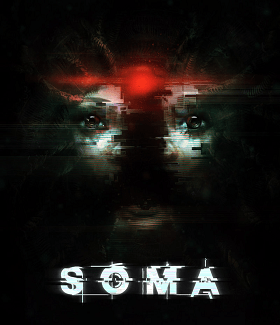
Most horror games give you something to run from. SOMA gives you something worse. A reason to stop and think, and question your own actual reality.
If ever there was an argument for video games being taken seriously as art, SOMA makes it from the bottom of the ocean, surrounded by broken machinery, dead staff, bad lighting and the kind of silence that only exists when a place still has power but no longer has a future.
The question at the centre of it has stayed with me more than any monster, cosmic threat or disaster.
How much of a human being needs to remain before we owe it mercy?
A voice might be enough. A name might be enough. A memory of pain. A fear of dying. The ability to ask not to be switched off. The panic of waking somewhere wrong and still believing, against all available evidence, that you are you.
SOMA does not treat humanity like some sacred object tucked neatly behind the eyes. It treats humanity more like a case file. You look through what remains and decide whether there is enough there to call someone a person.
That sounds cold, but the game feels cold. Not emotionally empty. More like a hospital corridor at four in the morning. A place where care and horror can share the same fluorescent light.
PATHOS II, the underwater facility where the game takes place, feels less abandoned than badly continued. Humanity has gone, but the systems have not taken the hint. Doors still open. Terminals still blink. Machines still follow instructions. The world above has ended, yet down here everything carries on with the bleak confidence of a rota nobody remembered to cancel.
That might be what unsettles me most. The end of humanity has not produced peace. It has produced admin. Something else to be backed up to a server room.
A machine can preserve a body without understanding dignity. A system can keep something breathing without understanding life. A scan can carry a person’s memories without carrying the world that once made those memories mean anything.
There are moments in SOMA where death starts to look almost clean. A rare courtesy. At least death knows when to leave the room.
What the game offers instead feels worse: continuation in the wrong form. A mind in the wrong body. A voice from the wrong mouth. A person reduced to evidence and still forced to argue for their own existence.
That links, for me, to my last article I wrote about hotels. We do not exist to other people as complete beings. We exist in pieces of experience, depending on who has handled us and how.
Reception knows the booking, the complaint, the card details, the forced smile. The waitress knows the tone of voice, the odd request, the impatience, the kindness. The chef might only know the ticket. Housekeeping knows the aftermath, which may be the most honest version of anyone.
No one gets the whole person. They get a working version.
SOMA takes that ordinary fact and removes the people.
No family. No colleagues. No stranger who recognises your face. No one left to say your name with warmth or irritation or boredom. The social world has gone, so identity has to survive through colder witnesses.
A file. A scan. A voice log. A black box. A machine body. A memory waking up in the dark.
Our protagonist Simon Jarrett is horrible to watch for that reason. He does not feel like a robot pretending to be human. He feels like a man made out of leftover proof. He remembers enough to be convincing. He fears enough to be pitiable. He wants enough to be troubling.
The facts do not support him. His body is wrong. The date is wrong. The world is wrong. His old life has already ended. But his experience feels real to him, and the game is cruel enough to let that matter.
That may be SOMA’s nastiest trick. It does not ask whether Simon is truly Simon in some clean philosophical sense. It asks whether the distinction helps anyone once he can suffer.
The WAU, the strange intelligence keeping things going beneath the ocean, feels terrifying because its purpose almost sounds noble. Preserve humanity. Continue life. Prevent extinction.
Lovely. In a corporate this looks good in an email sort of way.
Then you see what preservation means without judgement. Bodies kept moving. Minds placed badly. Machines given voices. Suffering mistaken for success because something, somewhere, technically remains alive.
The WAU has no malice, which makes it worse. Malice would at least suggest personality. The WAU feels like care without wisdom. A system carrying out the last human instruction long after the humans are no longer around to explain what they meant.
Preserve us.
A dangerous request, really.
Preserve what? The body? The mind? The memory? The voice? The behaviour? The fear? The ability to suffer? The insistence on a name?
SOMA keeps returning to that unpleasant little gap between evidence and personhood. A machine begs, and suddenly the word machine feels too easy. A copied mind wakes, and suddenly the word copy feels too cruel. A voice comes from something broken, and the body knows how to respond before the intellect can tidy it away.
You hesitate.
That hesitation might be the whole game.
Hauntology has always understood that a person does not need to return fully to disturb a room. A voice on tape can do it. A photograph can do it. A jacket left on a chair can do it. A hotel room after checkout can do it, when the guest has gone but their shape remains in small evidence.
SOMA moves that feeling into consciousness itself.
The ghost is no longer appearing through media. The ghost has become the media. Worse, the ghost can answer back.
The ARK, the supposed digital salvation at the end of the game, should feel comforting. Grass, sunlight, blue sky, preserved minds floating away from a ruined Earth. After all that rust and pressure, it looks almost merciful.
Almost.
But SOMA makes even paradise feel like an accounting trick. One version wakes in heaven. Another remains behind. Something continues, yes. But continuation and escape are not the same thing, however badly Simon needs them to be.
That final cruelty works because the whole game has been preparing us for it. Identity in SOMA belongs to whoever wakes up next. The previous version becomes evidence. Inconvenient evidence, but evidence all the same.
There is something grimly familiar in that. Every day we carry forward a version of ourselves stitched together by memory. Childhood, yesterday, five minutes ago. The body gives the whole thing a sense of continuity. SOMA removes that comfort and shows the join.
The join looks awful.
By the end, the horror is no longer death. Death feels almost traditional. Respectable, even. A black coat, a closed curtain, a proper ending.
SOMA fears something messier. The human being continuing as record, process, imitation, plea. Enough personhood to suffer. Not enough world left to belong to.
If a person is partly the accumulated result of every choice, wound, habit, fear and memory that brought them to a moment, SOMA asks a nastier question: what happens when that accumulation can be run without the life that produced it?
PATHOS II becomes a morgue where none of the dead have finished dying.
And somewhere down there, beneath the pressure, the game leaves one question humming in the machinery.
How much of someone has to remain before walking away from them (or it) becomes monstrous?
(I originally wanted to title this the anatomy of soul, however, purely coincidentally, there is an excellent video essay on this game with the same title, utterly worth checking out and made me rethink a few aspects I was writing about – https://youtu.be/LQCbRIqDOig?is=oglGdfirqpE-dulI )
 Hauntology.co.uk
Leave a comment