I have not really stopped thinking about Noroi since I watched it.
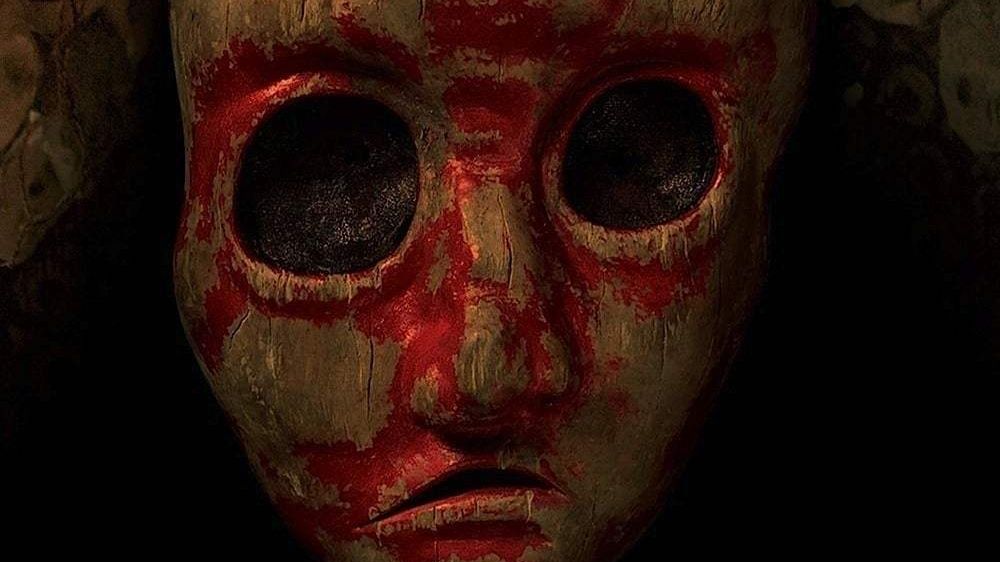
A lot of horror films leave you with a face in the dark, or a noise, or some miserable demon looking like it has been sleeping in a charity shop laundry basket. Noroi leaves you with connections. Worse than that, it leaves you with the feeling you should have noticed them earlier.
That gets under the skin. The film keeps passing tiny details across the table as if they are nothing. Local history. Strange behaviour. A throwaway comment from a witness. A slightly ridiculous television segment. A name that sounds like folklore until it starts behaving more like an instruction.
By the time the film begins to tighten, you realise you have not been watching a story unfold. You have been watching a demonic ritual assemble itself from damaged footage.
Kōji Shiraishi’s Noroi: The Curse feels less like a found footage film and more like a recording made during the process of disturbing something very old. It has the dead texture of factual television. Calm voices. Ugly rooms. Odd interviews. Cheap cameras. People standing in places that already feel wrong before anyone explains why. The film never has to dress itself up as folk horror. It has something better. Old rural violence surviving inside modern media, like a shrine left humming behind the wall of a television studio.
Kagutaba does not feel like a monster waiting to be revealed. It feels like an old system of belief that has lost its village and found a new home in tapes, broadcasts, apartments, archives and people foolish enough to keep asking questions.
Noroi feels so unusually cursed because the film is not just about something being caught on camera. The camera becomes part of the thing. The edit becomes part of the thing. The viewer, sitting there doing the clever little work of joining the pieces, starts to feel less like an observer and more like one more poor soul helping the ritual complete itself.
There has always been something slightly suspect about factual television. Not openly sinister. Respectable. A presenter in a tweed jacket standing in front of a run location. A witness filmed in a dry, beige room. A title card. A map. Someone saying unexplained with the serious patience of a man trying not to look embarrassed.
Noroi feeds on that texture. It has no interest in cinematic glamour. The film looks blunt, grey, awkward and practical. Good. Horror often loses power when it looks too pleased with itself. Noroi has the uneasy authority of something found in the wrong cupboard. The lighting can be ugly. The sound can feel functional. The interviews have that stiff, human discomfort of people trying to explain something impossible while still worrying how they look on camera.
The plainness becomes part of the dread. Noroi does not ask us to enter a dream world. It asks us to sit through evidence. Dreams have exits. Evidence has filing cabinets.
The film understands the strange afterlife of recorded material. A person speaks into a camera, then the person is gone, yet the speech remains. A place gets filmed, then changed, abandoned, hidden, drowned or forgotten, yet the image remains. A ritual loses its context, but a fragment survives in a clip, a phrase, a rumour, a recording. The past no longer needs flesh. It can move through storage.
Hauntology often sits in that gap. Not nostalgia, which usually amounts to memory with the dangerous parts sanded off. Hauntology feels more like being addressed by something incomplete. An old programme. A public information film. A church hall. A hotel corridor. A song made from pieces of other songs. Something that should belong to a finished time, except it has not finished with us.
Noroi belongs in that company. Its horror comes through formats that should have become harmless once recorded. Television segments. Research footage. Witness interviews. Local history. Archival fragments. The normal machinery people use to make uncertainty manageable. The film takes those tools and turns them into a ritual apparatus.
You can almost smell the stale air around the tapes. Not romantic analogue warmth. Nothing cosy. Noroi’s media feels cold, handled, copied, labelled, stored by someone who should perhaps have chosen another hobby. The footage has the feel of a thing that survived people.
That survival gives it appetite.
The tape remains after Kobayashi disappears. The edit remains after the house burns. The images remain after the people inside them have become victims, witnesses, carriers, or rumours. A normal investigation hopes that recorded material can preserve truth. Noroi has a more unpleasant suggestion. Perhaps preservation is not protection. Perhaps preservation is how the old thing travels.
Folk horror usually depends on geography. A village. A field. A hill. A wood. A church with the older stones still thinking beneath the newer roof. The threat belongs somewhere, even when the outsider does not understand the rules. A person arrives from the modern world and discovers that the old world has not gone politely into the museum.
Noroi feels different. Its old world has already been damaged. The village associated with Kagutaba is not presented as a living community with customs still intact. It feels more like an absence that continues to exert pressure. A place rubbed out badly. A rural system broken apart, with the worst pieces still sharp.
That makes the film more frightening than the usual remote village arrangement. Strange beliefs are one thing. Strange beliefs without a functioning community around them are worse. A ritual can be brutal and still have boundaries. A community can be cruel and still understand the shape of its cruelty. Once that community vanishes, once the land is overwritten, once the rite becomes partial memory and scattered evidence, the old force has no keeper left. What remains is not tradition. What remains is leakage of something that was msant to be contained.
Noroi has no interest in a quirky “the locals are a bit odd” pagan past. There is nothing picturesque in the way the old returns. No wheat field glowing at sunset while villagers sing beautifully about murder. No seductive pastoral nonsense. The rural past here feels damp, coercive and badly buried. An old name with a rotten mouth. An old rite stripped of any social meaning beyond survival and damage.
Forgotten places do not return as fully formed legends. They return as odd pressures. A road name nobody thinks about. A reservoir covering a valley. A local story repeated without belief. A family silence. An old map with a vanished settlement. A place where the present seems to sit badly on the ground.
Every town has some version of this. A building that used to be something else. A car park over a market. A hotel that once was a workhouse for the mentally ill now divided into rooms for strangers. A chapel with no worshippers, still making people lower their voices. We pretend the use of a place changes the place. Noroi knows the older use may simply wait inside the new one, offended by the wallpaper.
Kagutaba belongs to that kind of horror. A power detached from its original setting, no longer contained by the people who once knew how to name, appease, fear or avoid it. The old thing does not fade when the village fades. It migrates. Into apartments. Into families. Into television. Into investigative procedure. Into whatever modern life leaves available.
Modernity in Noroi does not defeat folklore. It gives folklore new routes.
The old god, demon, curse, appetite, whatever name sits least badly on it, no longer needs a village square. A camera crew will do. A broadcast will do. A viewer with enough curiosity will do. The ritual space expands from place to medium. The village boundary becomes the edge of the frame.
Noroi begins after catastrophe. Kobayashi has vanished, his wife is dead, his house has burned, and the footage has been assembled into the thing we watch. Already, the film has placed us in an uncomfortable position. We are not watching the investigation. We are watching the remains of the investigation.
An investigation has hope inside it. However doomed, the investigator still believes knowledge can be gathered in time. Remains have no such optimism. Remains arrive after consequence. They do not save the lost. They only ask the living to look again.
The whole film behaves like an archive that has become contaminated by the material it contains. The interviews, clips, recordings and notes do not simply explain Kagutaba. They preserve contact with Kagutaba. The name repeats. The symbols recur. The people connected to the case become linked by editing as much as by fate. One piece of footage beside another begins to feel less like explanation and more like arrangement.
An altar is an arrangement too. Objects placed with intent. Words repeated with care. Bodies positioned inside a pattern. The film’s edit does something uncomfortably similar. Footage replaces offering. Captions replace prayer. Voiceover replaces elder. The sober grammar of documentary becomes the new ceremony.
Noroi does not merely copy the look of real media to seem authentic. It asks what media does to the old sacred and the old cursed. What happens when an oral tradition becomes a recorded file. What happens when a local god becomes a subject. What happens when ritual knowledge is dragged into the exposed space of modern viewing.
The archive pretends to neutralise. Noroi suggests the archive may activate.
There is a very dry black comedy here, which suits the film. Modern culture believes anything can be managed once put into the correct format. The unexplainable becomes a case. The case becomes a file. The file becomes footage. The footage becomes a programme. The programme becomes discussion. Discussion becomes more attention. Attention becomes the thing the curse needed all along.
Nobody means to participate. That makes it worse.
The people inside Noroi keep trying to process the ancient through available systems. Police logic. Media logic. Medical logic. Entertainment logic. Expert logic. Paranormal investigation logic, which is police logic wearing a slightly cheaper coat. All of these systems come close enough to touch the outline, then fail to grasp the thing itself.
Kagutaba does not belong to any one system. It uses them all.
Noroi’s finest quality may be its refusal to flatter the viewer. It does not announce every important detail with a musical twitch and a worried close up. It has the patience to let significance sit unattended. A minor statement passes. A small repetition occurs. Something in the background feels slightly too shaped. A witness says more than they realise. The film moves on. You move on. Later, you discover the film moved on without you.
That delayed shame is rare in horror. The viewer becomes afraid not simply of what may appear next, but of what has already appeared and been insufficiently understood. The past of the film becomes unstable. Earlier scenes start to alter under pressure from later ones. You keep revising your own viewing, as if rearranging fragments might somehow undo what they reveal.
Fear rarely arrives as a complete sentence. It comes as a wrong detail, then another, then a memory of the first detail returning at a worse time. Disaster often announces itself in a tone too quiet for the moment. Someone says something odd. A pattern forms where no pattern should be. A thing repeats. A person changes. A room that once felt normal suddenly seems to have been waiting.
Noroi turns that into structure. The film is not built around one central revelation so much as a slow poisoning of attention. We learn to mistrust the throwaway. The minor becomes predatory. The incidental becomes charged. By the end, almost nothing feels safely decorative.
Folk stories often work through recurrence rather than exposition. A name heard three times. An animal behaving in a way that feels wrong. A child marked by something adults cannot discuss. A place one should not enter. A sound from beyond a wall. A rule broken by someone who never believed in the rule. The meaning gathers like mould. No single patch explains the house. Together they condemn it.
Noroi knows this rhythm. It does not solve folklore into mythology. It lets folklore keep its raggedness. The curse never becomes a tidy bestiary entry. Kagutaba remains partly understood, partly documented, partly misread, which feels much more convincing. The old stories that survive longest are rarely the ones with clean edges. They survive because they remain useful to fear.
There is also a cruel pleasure in how the film turns the viewer’s intelligence against them. We enjoy making connections. We like noticing patterns. We like feeling sharper than the poor people onscreen. Noroi offers that satisfaction, then makes it feel contaminated. Every connection draws us closer to the ritual logic. Every remembered detail makes the curse more coherent inside our own head.
The film does not jump out. It lets you do the work.
Mitsuo Hori should be absurd. In another film he might only be absurd. A ranting psychic in homemade protective gear, waving his panic around while the calmer adults try to get on with the business of making television. He looks like a man who has lost an argument with both electricity and furniture. For a while, the film allows the audience to laugh at him.
Then, gradually, the laugh curdles.
Hori is one of Noroi’s most important figures because he reveals the social problem of truth. Seeing something does not mean being able to speak it. Speaking something does not mean being believed. Being right, if expressed through the wrong body, the wrong manner, the wrong clothes, the wrong emotional temperature, may look identical to madness.
Hori has the truth, or something near enough to truth to ruin him, but he cannot package it for civilisation. He has no tone. No polish. No respectable frame. His knowledge arrives as alarm, and alarm is easy to dismiss when everyone would prefer the world to remain administratively normal.
The film plays him with unusual cruelty. He is not redeemed into a noble prophet. He remains difficult, embarrassing, often unbearable. His distress does not become beautiful. Thank God for that. Beautiful madness is usually cinema trying to sell suffering back to us with better lighting. Hori’s state is ugly, noisy and socially inconvenient. He seems less like a visionary than a man whose mind has been tuned to the wrong channel and left there until the signal burned through.
That makes him more frightening.
In older folk horror, the warning figure often belongs to the margins. The fool, the old woman, the drunk, the hermit, the one everyone avoids. Noroi drags that role into the media age. Hori is the village warning system after the village has gone. No bell tower, no wise elder, no one standing at the edge of the wood telling outsiders to turn back. Just a damaged man on camera, trying to explain the invisible structure of danger while making himself look less credible with every breath.
He becomes tragic because he is early. Not wrong. Early.
There is a familiar human nastiness in that. People dislike warnings before they have proof. They dislike proof when it comes from someone they do not respect. They dislike fear when it arrives without the correct paperwork. Hori cannot make the terror legible in polite terms. Kobayashi can, at least for a while. Kobayashi has the investigator’s calm, the camera, the format, the acceptable face of curiosity. Hori has panic and tin foil.
Kagutaba, with admirable lack of class prejudice, takes both.
One of Noroi’s bleakest insights is that television was always closer to ritual than anyone wanted to admit.
A séance gathers people around absence and asks them to wait for a signal. Television does the same with better scheduling. People sit in rooms, face the box, receive images of the dead, the distant, the staged, the repeated. Voices come from elsewhere. Places enter the home. Events are translated into light and sound, then absorbed by families eating dinner in silence. The living room becomes a little shrine to transmission.
Noroi’s use of television feels so powerful because the film treats media attention as a kind of occult activity. The variety programme, the interviews, the paranormal segments, the investigative footage, all of it becomes part of a wider ritual without anyone inside the system understanding what they are building. Each person thinks they are producing content, answering questions, giving testimony, documenting an anomaly. From another angle, they are moving pieces around a board.
Kagutaba does not need faith. The film’s modern world no longer has much faith to offer anyway. What it has instead is attention, repetition and circulation. A name spoken into a microphone. A face recorded under studio lights. A strange event clipped, stored and watched again. Belief may once have fed the old thing. Media now does the job with less poetry and better reach.
We live in a world that turns everything into viewing material. Grief becomes footage. Fear becomes footage. Breakdown becomes footage. Private horror becomes an episode, a thread, a recap, a reaction, a theory. The old village rumour now has thumbnails. The campfire tale now has comment sections. The curse no longer needs a road out of town. It has upload speed.
Noroi reached that idea without needing to be smug about it. Its media landscape feels shabby and specific, not grandly prophetic. That helps. The curse does not travel through sleek modern platforms here. It travels through the dull, awkward machinery of ordinary broadcast culture. The banality sharpens the dread. Evil with production notes. Hell in a sound check.
A television studio in Noroi can feel as ritually charged as a shrine because both are spaces designed to direct attention. The difference lies in what the participants think they are serving. In a shrine, everyone knows attention has weight. In television, everyone pretends attention is merely professional.
Kagutaba seems to know better.
Horror often treats knowledge as salvation. Find the book, read the inscription, discover the history, learn the name. Noroi keeps the learning process, then removes the comfort. Knowledge arrives, but it does not cleanse. It does not break the pattern. It does not give Kobayashi control. It deepens the infection.
Children fear the thing in the dark. Adults fear understanding exactly why the thing in the dark has already won.
Kobayashi’s investigation has an almost tragic decency to it. He is not a fool in the usual horror sense. He pays attention. He listens. He follows connections. He gives the strange and the distressed enough respect to keep looking. In another story, those traits would make him heroic. In Noroi, they make him useful to the curse. His intelligence becomes labour. His curiosity becomes transport. His documentary instincts become the means by which the old thing gains shape.
There is something horrible in that. The film does not punish stupidity. It punishes attention.
Of course, attention is exactly what the viewer gives too. The trap folds outward. Kobayashi investigates the curse. The editor assembles Kobayashi’s investigation. We watch the editor’s assembly and recreate the pattern internally. The curse moves through levels of interpretation. Each level feels more detached and therefore safer, yet each level repeats the act of arranging the material.
Noroi’s finest terror lies in that movement from event to record to viewing. The further the curse travels from the original ritual site, the more abstract it becomes, but abstraction does not weaken it. The opposite happens. Once a curse becomes pattern, it can live anywhere pattern can be recognised.
Humans are meaning making animals. We cannot help ourselves. Give us scraps and we connect them. Give us recurrence and we infer intention. Give us old footage and we look for the ghost in the grain. Noroi uses that tendency with great malice. It places us in a world where pattern recognition may be indistinguishable from participation.
The clever viewer becomes another surface for the curse to write on.
Noroi never reduces its horror to one easy metaphor, which is partly why it has aged so well. Still, the film carries a powerful sense of inheritance. The curse passes through bodies, families, children, performance, investigation and memory. People become vessels for something older than their personal suffering. Their private lives are rearranged by a story that began before them and does not care whether they understand their roles.
That sits at the heart of folk horror. The individual discovers that individuality may not save them. Blood, land, custom, secrecy and obligation all press against the modern fantasy of personal freedom. You can leave the village, but the village may have already left something inside you. You can forget the rite, but forgetting the rite does not mean the rite forgets you.
Noroi handles this without turning everything into neat psychological explanation. Too much modern horror wants to announce that the monster is really trauma, as if that somehow makes the monster deeper. Often it just makes the monster unemployed. Noroi allows trauma, grief and occult force to overlap without forcing one to become a polite symbol for the other. Human pain remains human pain. Supernatural hunger remains supernatural hunger. The horror comes from their entanglement.
A person in Noroi can be victim, witness, carrier and clue at the same time. That feels grimly right. Folk horror rarely grants the luxury of clean categories. The sacrificed may also transmit. The innocent may also open the door. The investigator may also become an offering. The mother, the child, the performer, the crank, the expert, all can be pulled into a structure older than their intentions.
The film’s treatment of children has a particular chill because childhood often functions in folk horror as the site where inheritance becomes visible. A child may carry what adults have hidden. A child may speak what others repress. A child may become proof that the past has entered the future. Noroi uses that fear without sentiment. There is no cosy innocence here, no simple opposition between pure child and corrupt adult world. Children in Noroi are vulnerable, yes, but also terrifyingly close to the machinery of transmission.
A curse survives by finding the future.
Noroi’s folk horror does not stay in remote landscape. It enters rooms. It seeps through walls. It finds apartments, studios, houses, corridors and ordinary spaces with tired lighting. That movement gives the film much of its power. The rural past does not remain rural once disturbed. It follows modern people home.
The domestic spaces in Noroi feel thin. Not physically thin, though the film makes excellent use of ordinary walls and rooms, but historically thin. The present seems badly insulated from the past. A sound from next door has the quality of something coming from another time rather than another flat. A house can feel less like shelter than a container with the wrong contents. A television studio can become a ritual chamber simply because enough attention is directed through it.
The old forces have not been left behind in the countryside. They have been carried into the places people pretend are neutral. Flats, offices, hotels, roads, shopping centres, hospitals. Spaces designed to make modern life feel organised. Yet every one of them sits on ground with older arrangements beneath it. The ground remembers differently from planning departments.
There is a line of thought running through hauntology that the present is never clean. Every room contains previous versions of itself. The old dining room under the conference room. The chapel under the storage unit. The family home under the hotel bedroom. The vanished village under the water. Noroi gives that idea teeth. A place changed by modern use may still answer to older names.
The film feels quietly hostile to the idea of progress. Not in a sentimental way. It does not claim the past was better. The past in Noroi seems horrendous. But the modern world’s belief in having moved on becomes laughable. The curse does not care that the village is gone. It does not care that television has replaced oral tradition. It does not care that people now explain things through experts and recordings. Those are not barriers. They are materials.
Modern life in Noroi resembles a renovation done over a corpse without checking whether the corpse had finished.
A lot of found footage horror misunderstands the form. It thinks roughness equals realism, as though a shaky camera automatically means truth. Noroi is smarter. Its power does not come from pretending the footage is real in a childish literal sense. The power comes from making the footage feel like it has a history outside the film’s need to entertain.
The clips feel used. Not polished, not conveniently dramatic, not always paced according to normal horror appetite. Some scenes have the drab drag of actual media. People explain themselves poorly. The camera stays with awkwardness. The investigation wanders. There is enough dead time to make the living time suspicious.
That messiness gives the film authority. Real evidence rarely arrives beautifully composed. Archives are full of ugly rooms, repeated statements, irrelevant looking material, faces caught in bad light, voices trying to remain calm. Noroi uses that texture to make the supernatural intrusion feel less like a set piece and more like a stain emerging across many documents.
The film also resists the clean escalation expected from genre machinery. It circles, returns, delays, recontextualises. The narrative has shape, certainly, but the shape feels discovered rather than imposed. As viewers, we are not marched from clue to clue. We are left to notice that the same bad smell keeps coming from different cupboards.
That quality suits hauntology perfectly. Hauntological art often feels assembled from leftovers. Fragments of public culture. Old sounds. Degraded images. Institutional voices. Educational material. Domestic memory. Noroi works like that too. It does not create fear through one polished nightmare image. It creates fear through accumulation, through the sense that ordinary media has been infected by something older than media.
The film could not be too elegant without losing its charge. Elegance would make it feel authored. Noroi needs to feel handled.
Kagutaba remains frightening partly because the film gives enough to understand without giving enough to domesticate. The name gains weight through repetition. The ritual history gives the thing a frame. The connections make its activity legible. Yet Kagutaba never becomes comfortably knowable.
That balance is difficult. A hidden monster can be empty. An over explained monster becomes a museum object. Noroi keeps Kagutaba in the more frightening middle. Present enough to organise the film. Absent enough to avoid being reduced to lore.
The old thing feels less like a creature than a system. An appetite with procedures. A hunger that moves through ritual shapes, family structures, media forms, human weakness and investigative attention. This makes it far more disturbing than a beast with claws. Claws are honest. Systems are patient.
Kagutaba also carries the discomfort of divinity without reverence. The film never settles neatly between god, demon, curse and folklore. That uncertainty helps. Old local powers often sit awkwardly in categories created after them. Calling such a thing a demon may say more about the person naming it than about the thing itself. Noroi lets the naming remain slightly unstable. Kagutaba feels like something older than the vocabulary being used to contain it.
There is no grandeur in its survival. No thunderous cosmic presence. The horror is smaller and meaner than that, which somehow makes it worse. It survives in cries, bodies, domestic dread, missing people, distorted behaviour, old ritual memory, dreadful repetition. It feels less like the apocalypse than a local wrongness that found a way to keep breeding.
Watching Noroi turns the viewer into an amateur folklorist, which sounds more charming than the experience deserves. You begin collecting. A name. A place. A behaviour. A repeated image. A contradiction. A local fragment. A damaged witness. You arrange them. You compare them. You start deciding what belongs.
That process feels pleasurable at first. It flatters the attentive viewer. Then the pleasure becomes suspect. The film has made your attention useful to it. You are now doing what Kobayashi does, only at a safer distance. You too are reconstructing the curse from traces. You too are bringing coherence to scattered material. You too are making Kagutaba more complete in the act of understanding.
There is a strange moral discomfort in that. Folk horror often depends on outsiders misunderstanding a culture, trespassing into sacred or forbidden spaces, treating living belief as curiosity. Noroi extends that trespass to the audience. We become consumers of the old wrong. We peer into the archive. We enjoy the mystery. We turn suffering into pattern. We want the connections to click.
The film lets us have that satisfaction, then leaves a bad taste.
Maybe all investigation contains a little violation. Maybe all documentary work risks turning pain into structure. Noroi does not need to preach about this. The form does the work. Every time the footage clarifies, someone inside it becomes less a person and more a node in the pattern. We understand more and feel worse. That is the correct direction for horror.
The viewer’s position becomes especially uncomfortable because the film itself arrives as a finished object after Kobayashi’s destruction. Someone has decided we should see this material. Someone has turned the remains into a consumable shape. The question of who benefits from that assembly hangs quietly over the whole experience. Human curiosity? Public warning? Sensationalism? Kagutaba?
Probably Kagutaba. It has the better distribution strategy.
Noroi is not often discussed as funny, but part of its darkness depends on a dry, horrible humour. Hori’s presence has an absurdity the film does not deny. The television material has that tacky entertainment world sheen where genuine distress can sit beside format requirements. Paranormal investigation itself carries a slightly comic quality, with its equipment, solemn phrasing and desperate attempt to make the invisible behave for the camera.
The film understands that horror and absurdity are not enemies. They are often neighbours. Real fear frequently arrives in undignified circumstances. People panic in badly decorated rooms. Prophets look ridiculous. Evidence appears in formats that make everyone involved seem faintly foolish. The supernatural, if it exists, has never shown much concern for atmosphere.
This gives Noroi a sharper edge than solemn horror. Solemn horror can become pompous, especially when it wants every symbol to stand under a spotlight and announce its emotional importance. Noroi allows the ridiculous to remain ridiculous until the moment the viewer realises the ridiculous may be accurate. That shift is nasty. Laughter becomes a debt.
The film also avoids the self serious costume of much prestige horror. There is no grand speech explaining grief as a haunted estate. No slow motion sadness presented as profundity. Noroi is too busy being unwell. Its grimness comes through procedure, detail and implication. It has no time to stand in a corridor congratulating itself for having themes.
A curse travelling through cheap television and broken folklore should have a little dirt under its nails. It should occasionally look absurd. Evil rarely has good taste. If anything, Noroi’s great strength lies in showing how the dreadful can survive perfectly well inside shabby forms. A god in a rotting shrine may still impress the tourist. A god in a badly lit interview room feels more humiliating, therefore more believable.
The modern people in Noroi do not live in a world of simple belief. That helps the film. They doubt, rationalise, perform, investigate, speculate, dismiss, half believe, then keep filming. Their uncertainty feels recognisable. Few people in modern life are pure sceptics or pure believers. Most hover in the swamp between. Laughing until the door opens by itself. Dismissing the omen while remembering it later in bed.
Noroi lives in that swamp. It never asks the viewer to adopt a fully credulous folk horror worldview from the start. Instead, it lets belief become unavoidable through accumulation. Not one miracle. Not one undeniable manifestation. A build up of wrongness that makes disbelief feel increasingly theatrical.
Old beliefs often survive inside people who claim not to believe them. They survive as habits. Avoidances. Jokes. Superstitions performed ironically until the moment irony suddenly looks thin. People who do not believe in ghosts still lower their voice in certain buildings. People who mock omens still remember them. Disbelief does not erase the old structures. Sometimes it merely makes people less careful around them.
The film seems fascinated by that carelessness. Modern disbelief has confidence, but little ritual intelligence. It can expose, record, analyse and broadcast, yet it no longer knows when to stop. The old village, however brutal, may at least have understood prohibition. Modern media understands access. It wants the room opened, the name spoken, the footage recovered, the witness interviewed, the mystery packaged.
Access without reverence becomes a kind of stupidity.
Noroi does not argue for a return to old belief. The old belief looks dreadful. Rather, the film suggests that losing belief does not automatically free anyone from the forces belief once managed. A society can forget why a boundary existed and still suffer when crossing it.
Noroi’s ending works because it does not merely provide a final shock. It sends meaning backward. Earlier scenes darken. Minor details become newly active. The whole film seems to rearrange itself inside memory.
A watched film becomes a haunted film when memory alters it after the fact.
Noroi excels at that. It makes a first viewing feel like exposure and a second viewing feel like diagnosis. You know where to look, which means you notice how early the illness was visible. That can be more disturbing than surprise. Surprise belongs to ignorance. Recognition belongs to guilt.
The final material also confirms the terrible uselessness of Kobayashi’s work. He finds the shape, but finding the shape does not release him from it. He documents the curse, but documentation does not master the curse. His effort survives him, which would be noble in another context. Here, survival feels like contamination.
The tape remains, and the tape still knows how to do its work.
We often treat keeping as an act of love or responsibility. Keep the photograph. Keep the letter. Keep the recording. Keep the archive. Keep the memory alive. Hauntology complicates that instinct. Kept things do not always remain obedient. They gather new meanings. They outlive the conditions that made them safe. They speak later, to people who lack the original context. They become relics, evidence, bait.
Noroi is full of kept things. Footage kept after death. Local stories kept after the village has gone. Ritual knowledge kept in broken form. Images kept by television. Fear kept in the bodies of witnesses. Nothing is allowed to vanish cleanly. Everything leaves residue.
That residue becomes the film’s true substance. Kagutaba may be the named centre, but the surrounding residue gives it life. The curse survives through what people retain without understanding. A partial memory can be more dangerous than no memory at all. Enough knowledge to invoke, not enough to contain. Enough evidence to connect, not enough to prevent. Enough footage to transmit, not enough to save.
There is an awful lesson in that. The past does not need to be fully remembered to remain powerful. Sometimes fragments are sufficient. A fragment can cut. A fragment can lodge in the mind. A fragment can wait for another fragment.
Old media often returns in fragments. Clips without full programmes. Photographs without names. Audio without source. Broadcasts stripped from their original night and uploaded into another era. We encounter the dead form without its living context, then supply our own. Hauntology lives in that act of incomplete reception.
Noroi turns incomplete reception into danger.
The experience of watching Noroi does not end cleanly because the film changes the quality of small details for a while. A noise through a wall. A bird behaving oddly. A face on old footage. A local name with too much weight in it. The mind, freshly trained by the film, starts to behave badly. It looks for relation. It expects the passive detail to return.
The film becomes one of the great horrors about attention. It does not simply frighten the viewer. It alters the viewer’s method of looking. The world becomes slightly more archival. More folkloric. More suspiciously edited.
The best horror often does that. It leaves a temporary grammar behind. After The Wicker Man, a cheerful rural song can sound like a threat. After The Blair Witch Project, a pile of stones can become a legal document from the woods. After Ghostwatch, the television studio and the family living room no longer feel safely separate. After Noroi, a throwaway detail feels capable of waiting.
The film belongs among those works because it understands that folk horror is not only about ancient customs, and hauntology is not only about old media. Both are about persistence. What carries on after its official time has ended. What returns through forms that should have made it harmless. What waits inside the archive, the landscape, the broadcast, the family, the room.
Noroi’s curse has no need to chase. Chasing would cheapen it. It has patience, recurrence and storage. It can afford to be quiet.
What finally makes Noroi so effective is the way its folk horror and media horror become the same thing. The vanished village and the surviving footage are not separate concerns. They mirror each other. Both are forms of presence after loss. The village is gone but not gone. Kobayashi is gone but not gone. The ritual is broken but not gone. The footage is dead but not dead.
Everything in the film occupies that horrible middle state.
The curse lives there too. Between belief and disbelief. Between rural past and broadcast present. Between investigation and invocation. Between documentation and transmission. Between watching and participating.
Kagutaba has lost the old village, but modernity has kindly provided a larger one. A dispersed village of viewers, investigators, performers, editors, witnesses and repeat watchers. A folk community without proximity. A ritual circle connected by playback.
Noroi feels like a film made from that circle. It does not present a curse so much as model one. A thing broken into pieces, distributed through attention, reassembled by whoever receives it next.
That is why the film has stayed with me. Not because it has the most frightening images in horror, though it has images that stick unpleasantly. Noroi works because it makes connection itself feel dangerous. It gives the mind a set of fragments and lets the mind do what minds do. Build. Compare. Return. Explain. Repeat.
By the end, the viewer has become useful.
A lot of horror wants to be unforgettable. Noroi is worse. It wants to be remembered incorrectly at first, then more accurately later, in the dark, when some tiny detail comes back with its face changed.
The village is gone. The rite is broken. The god has no proper home. The investigator is missing. The footage remains.
The footage remains.
And somewhere inside it, the old thing waits for attention to become belief.


Leave a Reply